

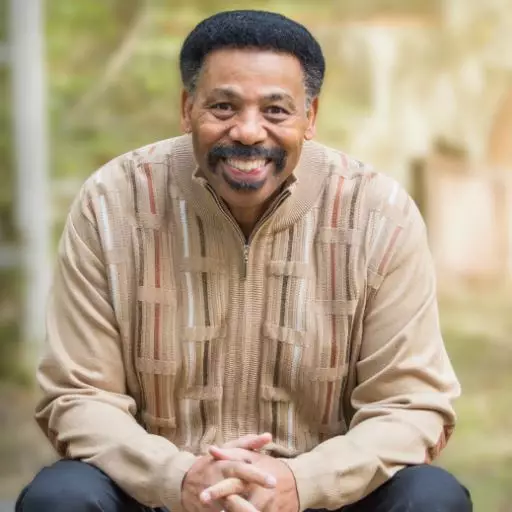
The Spheres of the Kingdom Agenda


God’s agenda for His people reaches into every area of life. Dr. Tony Evans examines the different spheres where God’s Kingdom should be expressed and explains what changes when we begin viewing our personal lives, families, churches, and communities from His perspective.
Dr. Tony Evans: You shouldn't be too tied up to give him any of your time or any of your energy when you've gotten everything from him.
Guest (Male): Dr. Tony Evans says church isn't just a place to be blessed, it's a place to be a blessing.
Dr. Tony Evans: You should come to church expecting to hear from heaven so that you can adapt heaven's viewpoint in history.
Guest (Male): This is the alternative broadcast featuring the timeless biblical teachings from the archives of Dr. Tony Evans. Christianity changes who we are and what we do in every sphere of life. Today, Dr. Evans focuses on some of those specific areas and how different they look when we see them from the perspective of God's kingdom agenda. Let's listen.
Dr. Tony Evans: We've been talking about God's kingdom and God's kingdom agenda. The kingdom agenda is defined as the visible demonstration of the comprehensive rule of God over every area of life. We've reviewed that concept for you to understand that the unifying thread of scripture is the glory of God through the expansion of his kingdom. And that kingdom is his rule from heaven on earth through his officials. God has four spheres, four covenantal spheres by which he operates. It is your relationship to these four spheres, realms, contexts of rulership that will determine the flow of God's movement in your life.
The first sphere that's introduced to us through which God works and rules in history is the individual, the person or what we might call self-government. God's goal is that every person learns to govern themselves under divine rule. That's why he speaks to how blessed is everyone, every individual. When you stand before God, it won't be a group meeting. You will stand before God naked and alone, and the Bible says you will give an account for your life from conversion to death. And you will stand there and God will want to know how you governed yourself.
So, it all starts with the individual, your individual connection with God. Nobody can do that for you. He says, blessed is everyone who takes God seriously, proven by you walking in his ways. It's amazing people who want to hear from God, who don't want to obey him, who want to hear from God, who don't want to follow him, who want to hear from God, who don't want to repent in their failure to follow him. If you're going to be operating under the umbrella of his covenant, you must individually and personally submit to him. And he pronounces a blessing, blessed is everyone, no exceptions.
In fact, in verse two, he gives three blessings. He says, you will eat the fruit of your hand, that's your fortune. You will be happy, that's your feeling. It will go well with you, that's your future. Your fortune, your feeling, and your future. He says, I got your back if I can get your walk that demonstrates you take me seriously. And so, if you're going to be a kingdom Christian operating on his agenda, you must personally decide to take God seriously. He then goes to the next rung on the ladder, the family. He says, and your wife shall be a fruitful vine, verse three, in your house.
And your children like olive plants around your table. He goes to the family, the foundational institution in society. Plato wasn't right about a lot, but he was right about this. The saga of a nation is the saga of its families written large. The breakdown in America doesn't start with the White House, it starts with your house. It's amazing, people want to see things better in Washington when they can't get better on the street where they live. He starts with the men because that 's where God always starts. That's why he says, your wife shall be a fruitful vine within your house.
But don't leave verses one and two, he's assuming you fear God. The idea is you fear God and she's responding to your fear of God. And how do you know she's responding? Cuz she's changing. It says she will become a fruitful vine. Now, right now, she might be thorns and thistles. But he says when the fear of God does its work through the man of God who fears the Lord, he says your wife shall become a fruitful vine. Now, that's a great vineyard. There are three things that need to happen for a great vineyard to become fruitful.
It must cling, climb, and cluster. That is in Napa Valley where they grow grapes. They tie the branches on post so that the post elevates the branches so they don't drag on the ground. In other words, they secure them. When they secure them on the post, then the branches are free to climb along the post having clung upon the post. Once they climb on the post having clung upon the post, they cluster in bunches of grapes. Those grapes are squeezed, that becomes grape juice, it's fermented. He said when a man fears God and brings it home, he says he will begin to see changes take place in his mate when she has somebody to cling to, security, a place to climb, freedom to become what she was created to be.
Then she will cluster so he can become intoxicated on her love. It says, but she will become a fruitful vine notice within your house. Because in the Bible, a woman would never compromise her home for the marketplace. She would never compromise her home for her career. She wouldn't let the job be good and the house be a mess. She wouldn't let the job be on time and the house be chaotic because the Bible says in Psalm 31 that the woman who feared the Lord had a home that was in order. The proof that she was serious about God showed up in her home, not in a briefcase.
So, if a woman fears God, the home is first. The man places himself under God. She places herself prioritizing the home so that the home reflects the order of God. The reason why our homes are chaotic is because both husband and wife are out of alignment. He's out of alignment with God, she's out of alignment with him, and they want to know why we all can't get along. Because we're out of alignment. We're not in alignment with his kingdom. He says, and your children will be olive plants around your table. Not olive trees, olive plants.
It takes 15 years for an olive plant to become a full-grown olive tree. But if you nurture it right, it'll produce olives for 2,000 years. Over in Israel, there are 2,000 year old olive trees still pumping out olives in the Garden of Gethsemane cuz their roots run deep. And their roots run deep because they were nurtured. We are having a generation of unnurtured young people. Because the family breakdown, we have a generation of young people who are olive plants that will never become olive trees because they will have no root system. I go through the airport and it goes beep beep beep beep beep beep beep.
I mean, they got to back up. I got something in my pocket. But sometimes I have my keys in my pocket, walk through the magnetometer, and it doesn't go off. The reason why it goes off sometimes and doesn't go off other times is because magnetometers can be set at different levels of sensitivity. So, depending on who sets it depends on how sensitive it is, depends on how quickly it goes off. We got a generation today of young people whose consciences don't beep cuz there have been no mama and daddy to set it. God is called parents to raise children, not governments.
It's not a village that raise a child, it's a mama and daddy that raises a child. All the village can do is assist. God is not called the television to raise your children. He's not called the government to raise your children. He's not called the church to raise your children. He called a mama and a daddy to raise their children. Anybody else is only an assisting agent. And in fact, it tells you how to do it. He tells you how to do it. This is for every man in particular or head of household. He says, and your children shall become olive plants that is productive people around your table.
Because the way a Jewish father led his family was at the table. Every man in here can lead his family and all you need is an hour a day, maybe an hour and a half a day, but you do have to be at the table. Because the table wasn't just for eating, the table was for leading. Father would come to the table. The kids would stand up until father sat down. Then the whole family would sit down. Then daddy would take over cuz while the food was being served, he was asking questions. Have you done your homework?
Have you done your housework? Mother, have there been any discipline problems that I need to take care of? Who are your friends that you're hanging out with? Daddy was going to lead cuz he was going to be at the table. We have a generation today where nobody's at the table. In fact, everybody eating their own meals in their own room and not even coming to the table, watching their own private televisions. You cannot lead your family with the television on and the radio on and you not at the table. The job is to sit at the table under the rule of God demonstrating as Joshua said, as for me and my house, there is no vote.
As for me and my house, we will serve the Lord. He moves from the individual to the family, the foundational social structure. That 's why the Bible calls marriage a covenant. If you're single, you don't yet have a family unless you're a single parent, you should be preparing yourself for if that day comes and when that day comes to be the man that God wants you to be or the woman that God wants you to be. You may be saying, well, I don't have a mate yet. Well, become the mate you want them to have based on what God wants you to be because you're coming under his individual rule.
Guest (Male): Dr. Evans will return to look at a third sphere of life when he continues our message in just a moment. Before he does though, I want to remind you that the idea that everything in life needs to line up with God's kingdom agenda is really the cornerstone of Tony's teaching. To help you review these key concepts and pass them along to others, we'd like you to have all six full-length messages in Tony's kingdom agenda series. It's a comprehensive look at what it means to live life the way God intended. And we're offering the complete collection on CD, USB flash drive, or instantly downloadable MP3s as our thank you gift when you make a contribution to support this ministry.
And as an added bonus, we'll also include Tony's One Kingdom Under God paperback. It goes hand in hand with this teaching helping you see the world through God's eyes as you recognize the part you play in his eternal kingdom. Take advantage of this special limited time offer by visiting tonyeven.org or give us a call day or night at 1-800-800-3222 and let one of our team members help you. That's 1-800-800-3222. Well, Dr. Evans will return with more of today's lesson right after this.
Guest (Female): Picture yourself surrounded by crystal clear waters, warm Caribbean breezes, and the kind of quiet that allows you to hear from God in a fresh way. This February 28th through March 7th, you're invited to join Dr. Tony Evans and friends for a 7-day Caribbean cruise, a journey of rest and renewal. You'll visit beautiful ports of call like Nassau in the Bahamas, the pristine shores of Grand Turk and Amber Cove in the Dominican Republic, even stopping in a private island designed for pure relaxation. And in between, you'll enjoy peaceful days at sea perfect for reflection, fellowship, and rest.
Along the way, you'll experience powerful Bible teaching from Dr. Evans, uplifting worship, meaningful connection with a community that feels like family, and enjoy the company of special guest Priscilla Shirer and Anthony Evans. If your soul needs refreshing and your spirit needs renewing, this is your invitation. Find out more and make your reservation today at tonyevans.org.
Guest (Male): Well, let's get back to Dr. Evans now in Psalm 128.
Dr. Tony Evans: He goes to the third category, verse five. The Lord bless you from Zion. The Lord bless you from Zion. Ah, Zion is one of those graphic biblical words. It was the word used to describe the location of God's holy presence. So, there's a mountain called Zion, Mount Zion, the holy mount. Then on the mount called Zion is a city called Zion, the city of David, Jerusalem, the holy city. But on the mount called Zion in the city called Zion, the Bible calls another thing Zion, the building that was in the city called the temple. He's talking about the temple here cuz we're going to get to the city in just a moment.
The temple was the place where God's glory dwelt. It was where God's unique concentrated presence was. God is bigger than a temple. No building can hold him, but he gave his concentrated presence in the temple. You say, but that's in the Old Testament. Not quite. 1 Corinthians 3, Ephesians 2 says that the church of Jesus Christ is the temple of God. Hebrews chapter 11 says when Christians come to worship, they come to Zion. He's talking about the church in New Testament application. He says then the Lord bless you from Zion cuz it was expected that the families of God would gather to be reinforced that you're not weird.
There are a lot of other folk who think like you think, act like you act, teach like you teach, do what you do cuz you belong to a community of people where the corporate presence and power of God is manifested. Says the Lord bless you from Zion. It's where your talents, not only your treasures, but your talents are to be demonstrated. The gifting God has given you for the building up of the body of Christ should be demonstrated. You shouldn't be too busy to serve God, too tied up to give him any of your time or any of your energy when you've gotten everything from him.
And then he comes and concludes. He says, the Lord bless you from Zion and then may you see the prosperity of Jerusalem all the days of your life. Indeed, may you see your children's children. He says, peace be upon Israel. Now, did you notice the flow? He went from the individual to the family, the family to the church, and now the church to the society. Jerusalem in Israel, that's the city and the country. Because that's the way God works. We want to see our country made better from the top down. That's called backwards Christian soldiers because what God wants to do is see a transformed from the bottom up, from individuals committed to families, families committed to churches, churches making an impact that makes a difference in society.
God is not looking for covert operatives, CIA representatives, or secret agent Christians. Unless you acknowledge Jesus Christ, there is no authority. There must be a Christ relationship for God to flow because remember he's the Lord of the covenant and the Lord of the kingdom. And unless there is a connection to Jesus Christ, not just this general vague, nobody know what you're talking about, believing God. Are you known as a follower of Jesus Christ in the marketplace where you live and work and play, not just in church? God created government. And God created government, the Bible says, to be a minister of God.
Romans 13. It's supposed to reflect divine rule, but the only way it can do that is if it's got righteous people in it and righteous people voting righteously. Oh, he says and you will see the city prosper. Why? Because you're operating under divine rule, under his kingdom agenda, the visible demonstration of the comprehensive rule of God over every area of life. Now, the reason why this is my favorite passage in the whole Bible is because it's also my story. I was born into a non-Christian home, a home with a lot of conflict. Didn't know whether our family was going to make it or not.
But when I was 11 years old, two men came to my father and asked him did he know where he was going to spend eternity. And he did not. They shared the gospel with my father and my father accepted Jesus Christ as his personal savior and was born again. He came home a changed man. Now, my mother didn't like him as a sinner and couldn't stand him as a saint. The only time he could read his Bible was late at night at midnight after everybody had gone to sleep. But almost a year later, she came down the steps one night crying.
And he said, what's wrong? And she said, now, I don't get it. The more I hate you, the more you love me back. The more I reject you, the more you accept me. The more I make it hard for you, the easier you make it for me. I don't get it. But whatever this thing is that you have must be real. How can I have it too? That night, my father got on his knees with my mother and led her to Christ. They gathered the four of us around the table. I'm the oldest of four.
Shared the gospel and when I was 12 years old, I accepted Christ. My father is a high school dropout. He had to drop out of school to make ends meet. I became the first one in my family to graduate from high school, then the first one to go to college. And while in college, I heard about Dallas Seminary and I came here and got my master's degree at Dallas Seminary and then I became the first African American to get a doctorate from Dallas Theological Seminary. While working on the doctorate at Dallas Theological Seminary, we started Oak Cliff Bible Fellowship with 10 people in our house.
That's become the church it is today. While the church was developing, we started our national ministry, the Urban Alternative, where we're heard all around the world preaching God's word. Now, I didn't tell you that to tell you about me. I told you that to tell you about my father. You see, he learned to fear God. He brought it home. My mother became a fruitful vine. I became an olive plant. He took us to Zion and that's the reason I'm in Dallas today because it's my story. But not only that, verse six says, and you'll see your children's children cuz every man in here should be living for your grandchildren, not for your children.
You should be thinking multigenerationally, not just the generation that you sired. You're supposed to be thinking in terms of grandchildren in your philosophy, grandchildren in your thinking. You will see your children's children. So, my father can turn on the television and see Priscilla teaching women all across the country or turn on another station and see Anthony leading worship or come down here and see Crystal involved with the women's ministry or see Jonathan playing football and and knowing that he has a testimony for Christ and now knowing he works in the ministry, he can see his children's children all because he learned to fear God.
Now, is everything perfect? Is everything without a problem? Are there challenges? Absolutely. But when the foundation is sure, you can correct the windows and the doors and the roofs. But it starts with the alignment underneath God and his rule.
Guest (Male): Dr. Evans will return in a moment with a final illustration about the kind of impact we can make when we get our foundation in order. First though, I want to let you know that today's message, the spheres of the kingdom agenda is part of Tony's powerful teaching series simply called The Kingdom Agenda. Now's the time to get in touch with us to find out how you can receive the full-length version of all six messages in this collection including material we haven't had time to present on the air. We'll send you the complete series on CD, USB flash drive, or digital download as our thank you gift when you make a contribution to support the ministry.
And for a limited time, we're also including Dr. Evans One Kingdom Under God paperback, a resource that can help you put these kingdom principles to work in your own life. Details are waiting for you online at tonyevans.org or let one of our team members help you by calling 1-800-800-3222. That's 1-800-800-3222. Too many Christians build their life around what people say about the Bible instead of what the Bible says about people. Tomorrow, Dr. Evans explains why that's such a dangerous temptation as he talks about the real authority for kingdom Christians. Right now, he's back with this closing illustration.
Dr. Tony Evans: In closing, my favorite program growing up as a kid in Baltimore was Superman. Oh, I love Superman. Did I love Superman? As Clark Kent, he was a bumbling idiot. Lois Lane, you know, didn't like him. Jimmy Olsen would make fun of him and Perry White would often skip him. Oh, but don't let him find a telephone booth. I'd be sitting on the floor next to my brother and somebody when the criminals in Metropolis came out would say, where's Superman? His cosmic ears would pick it up. He'd unhook his tie, take off his glasses, unbutton his shirt.
I look at my brother and say, there he go. He would run into a telephone booth or run into a a closet, come out lickety-split with a red and blue jumpsuit on. And now he was faster than a speeding bullet, more powerful than a locomotive, able to leap tall buildings in a single bound. He goes streaking across the sky and they say, it's a bird. No. It's a plane. No, no. It's Superman. And now he would come out with this S on his chest and he would break knives, crush guns, catch bullets. He would take criminals and he changed the topography of Metropolis.
How could he bring about this transformation in his community? Because he wasn't from here. He was from a place up there called Crypton. But he brought the power from up there and brought it down here so that down here benefited from him being from up there. And when he changed clothes down here, got the result of him being from up there. What God is saying to you and me is we need to change clothes. We need to take off that old way of thinking, old way of walking, old way of relating, old way of functioning, and put on our jumpsuit and come out with an S on our chest.
Now, that S doesn't mean you're Superman, but it ought to mean you're saved. That S doesn't mean you're Superman, but it ought to mean you're sanctified. That S doesn't mean you're Superman, but it ought to be meaning you're the saint of the living God so that when people see you leave Oak Cliff Bible Fellowship, they say it's a bird. No, it's a plane. No, it's them super saints from that church on camp with them road who reflects the values down here of the kingdom of God up there.
Featured Offer

When life feels uncertain, it’s easy to wonder where God is and whether He’s still at work. But even in the midst of struggle, His Word offers hope, direction and a foundation you can trust.
In The Kingdom Agenda sermon series and One Kingdom Under God booklet, Dr. Tony Evans helps you discover what it means to live under God’s authority, reclaim spiritual ground and experience His rule in everyday life.
Perhaps biblical truth has helped you find your way through a difficult season. Your generosity today can help someone else experience that same encouragement. As you partner with The Urban Alternative, we’d love to place these resources in your hands to strengthen your walk with God.
Past Episodes

Video from Dr. Tony Evans
Featured Offer
When life feels uncertain, it’s easy to wonder where God is and whether He’s still at work. But even in the midst of struggle, His Word offers hope, direction and a foundation you can trust.
In The Kingdom Agenda sermon series and One Kingdom Under God booklet, Dr. Tony Evans helps you discover what it means to live under God’s authority, reclaim spiritual ground and experience His rule in everyday life.
Perhaps biblical truth has helped you find your way through a difficult season. Your generosity today can help someone else experience that same encouragement. As you partner with The Urban Alternative, we’d love to place these resources in your hands to strengthen your walk with God.
About The Alternative
The Urban Alternative is the national ministry of Dr. Tony Evans and is dedicated to restoring hope and transforming lives through the proclamation and application of the Word of God.
About Dr. Tony Evans
Dr. Tony Evans is the founding pastor of Oak Cliff Bible Fellowship in Dallas, founder and president of The Urban Alternative and the author of over 150 books, booklets and Bible studies. Dr. Evans holds the honor of writing and publishing the first full-Bible commentary and study Bible by an African American. His radio broadcast, The Alternative with Dr. Tony Evans, can be heard on more than 1,200 US outlets daily and in more than 130 countries.
Contact The Alternative with Dr. Tony Evans
info@tonyevans.org
http://tonyevans.org/
Mailing Address
The Urban Alternative
P.O. Box 4000
Dallas, TX 75208
Telephone
1-800-800-3222