

Astonishing Authority, Part 1


Mark 1:21–28
In a world of competing voices, whose word can you trust? When Jesus taught in the synagogue at Capernaum, the people were astonished. Unlike the scribes, He spoke with authority, and even the demons obeyed Him.
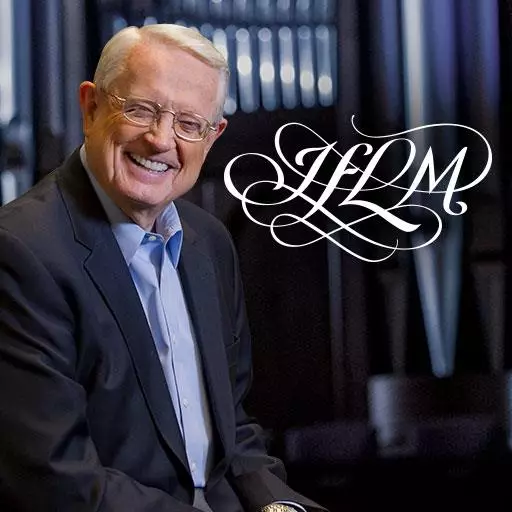
Pastor Chuck Swindoll opens Mark 1:21–28, revealing how Jesus’ teaching and His confrontation with an unclean spirit displayed an authority no one had ever witnessed. His words carried weight because of who He was.
Encounter the astonishing authority of Jesus Christ. His word silences demonic forces, and His truth transforms human hearts!
Bill Maier: Today, on Insight for Living, Chuck Swindoll brings us into a first century synagogue where a stranger from Nazareth stood up to teach. There was something different about the way this man spoke. The people had heard teachers before. They'd sat through more than a few dull ones, but this one, this man was different. His words carried a weight they'd never encountered, and the room fell silent because something happened that no one in the room saw coming. Chuck opens our eyes to it today as we read from Mark chapter 1.
Chuck Swindoll: The word of God is alive and active and sharper than a two-edged sword is able to pierce between the joints and the marrow than the soul and the spirit and is able to judge the intentions of the heart. Before our God, all things are laid bare. With him, there are no secrets. There is no private chamber to which we can go to escape from him, nor would we if we could. We got help us to learn the value of earnestness in our walk with him. Learning not to take anything for granted, anything. We have the privilege of having a Bible in our own tongue and available in print for us to read and from which to learn.
We love God's word. We don't worship the print on the page. We worship the one who gave us his word and preserved it for us. Mark 1 has been preserved through the centuries, and verses 21 to 28 are like words written with a stylus and drilled into ancient marble and preserved for us to see and to read and from which to learn. And that's all before us today. Mark 1 21 to 28. They went into Capernaum and immediately on the Sabbath, he entered the synagogue and began to teach. They were amazed at his teaching, for he was teaching them as one having authority and and not as the scribes.
Just then, there was a man in their synagogue with an unclean spirit, and he cried out saying, what business do we have with each other, Jesus of Nazareth? Have you come to destroy us? I know who you are, the holy one of God. And Jesus rebuked him saying, be quiet and come out of him. Throwing him into convulsions, the unclean spirit cried out with a loud voice and came out of him. They were all amazed, so that they debated among themselves saying, what is this? A new teaching with authority. He commands even the unclean spirits and they obey him.
Immediately, the news about him spread everywhere into all the surrounding district of Galilee.
Bill Maier: You're listening to Insight for Living. To dig deeper into the Gospel according to Mark, be sure to purchase a copy of our Searching the Scriptures Bible Study workbooks by going to insight.org/offer. Chuck titled today's message Astonishing Authority.
Chuck Swindoll: Being in the presence of Jesus Christ must have been an awesome experience. Awesome. Watching him in action and seeing him as he ministered to people of all types with all kinds of needs was just magnificent. And hearing him preach with such magnificent mixture of authenticity and authority was surely breathtaking. Folks were we would use the word thunderstruck. I did a quick survey in the Gospels and found the responses in these words. They were amazed. They were astonished. No one dared ask him a question. No one ever spoke like this man. And again, they were amazed at his teaching.
His content was reliable. His theology was impeccable. His presentation was flawless. His words were penetrating and most of all his authority was compelling. Better said, astonishing. Whoever heard him realized how different he was from any local rabbi they had listened to or any instructor, no matter the official title. There was no one like Jesus. An expositor from the past named George Campbell Morgan was the minister at Westminster Chapel in the heart of London on two separate occasions. Interestingly, he served there from from 1904 to 1917 and left. And then he returned in 1933 and again ministered at Westminster until 1943.
Well-known expositor, fine church, um known for his exposition of the Scriptures. And along came others in his train that have followed in the same suit. Uh Martin Lloyd Jones, one of the better known of those there. I I remember the privilege that was mine to preach at Westminster Chapel. Uh first getting into the pulpit is an experience. Here is a spiral staircase you walk up until when you are in the pulpit, you are about the level of the balcony, which is sort of a horseshoe shaped around the building. But the people on the first row were way down there, it seems.
Cynthia was sitting there looking up like that from the front row. I remember that. But tears came to my eyes when I realized what a privilege it was just to stand in the place where G. Campbell Morgan had once held forth. Morgan not only preached there at Westminster Chapel, he also trained young ministers who would one day preach in the congregational ministry. He used to say that every sermon needed three essentials, truth, clarity and passion. I thought about that. It is the truth that gives the message relevance. It is the clarity that gives it understanding.
It is the passion that makes it interesting. Regarding all of that, Morgan told of the life of a of a great English actor named Macready. A preacher once asked him how the actor could draw such crowds by just using words that were fictional while he, the preacher, always preaching the truth could not draw much of a crowd at all, he said. Well, it's quite simple, replied the actor. I can tell you the difference between us. I present my fiction as though it were truth. You present your truth as though it were fiction. Then Morgan added his own comment, given the preacher with his Bible, I cannot personally understand that man not being swept sometimes right out of himself by the fire and the force and the fervor of his work.
Not a great line. How tragic it is that so many preachers have decided to deliver the truth as though it were fiction. No wonder audiences are bored to tears. No wonder it is considered dull to come to a church and to sit through it. Television personality of yesteryear Jack Paar once made a great comment. The greatest sin on earth is to be dull. Billy Wilder added, I have a vast and terrible desire never to bore my audience. J. B. Phillips, who gave us one of the early paraphrases of the Bible, or at least of the New Testament, wrote, if words are to enter people's heart and bear fruit, they must be right words shaped cunningly to pass all defenses and explode silently and effectually within their minds.
I've had that experience having sat in the presence of some great preachers, great in the sense that they knew how to take the print from the page and deliver it in a way that forced me to stay aware and awake and alive as those words exploded in my mind back to Jesus. Never once did he present truth as if it were fiction. Never dull. Never bored in his hearers. People stayed on the edge of their seat as those words penetrated their defenses. He even called people out of their regular world of their occupation and they followed him without hesitation.
Amazing. We see that right here in Mark chapter 1 as we do a little quick review of where we were last time. The first place Jesus goes, we read in verse 16, is Galilee. That's the area where he was reared. Nazareth is in Galilee. And and there along the seashore of the Sea of Galilee, that lake that is up in the northern part of the land of Israel, he does his carries on his ministry and he comes upon two men first, Peter and and Andrew, his brother, and after a brief brief conversation, whatever words were said beyond what Mark records, they were enough for those men to drop their nets and to begin to follow him.
The only promise he gave them was I will make you become fishers of men. And that was enough for them. Fishing for fish is one thing. We will never go hungry, but fishing for people uh there's an eternal satisfaction in that that no food will ever satisfy. Shortly after those two, he comes upon James and and and John and these two brothers are working with their father Zebedee and they're amending their nets, we read here in verse 19. And again, Mark's favorite word, immediately. He called them and they left their father Zebedee along with the hired servants and they went away to follow him.
You imagine just hanging a sign on your on your door at the business, not gone fishing, but gone forever, following Jesus or something like that. Zebedee still has his mouth open watching his boys walk away. He didn't call Zebedee, he called John and James. And his words were like none other. And they left and they followed him. There was something about his presence. There was something magnetic about his words. The next scene Mark presents, we find him on a Sabbath. That's Saturday. And this is Jewish country. This is among the Hebrews and they are in Capernaum.
Capernaum is a little village about 20 miles from Nazareth, northeast of Nazareth. Capernaum is on the shore of the Sea of Galilee. Nazareth is more inland down south southwest of Capernaum. But we read that immediately on the Sabbath, he entered the synagogue and began to teach. I have the feeling that very few of you have ever even been in a 21st century synagogue. None of us could ever be in a first century synagogue. What was the synagogue like? First thought is well, probably like our church except they teach the Old Testament, not at all like our church, not at all like any church.
The first century synagogue served three purposes. First, on the Sabbath, it was a place of instruction. During the week, it was a schoolhouse where the children were taught the first five books of the Old Testament called the Torah, Genesis through Deuteronomy. And then on occasions when there was a need, minor court cases were held at the synagogue. Legal work was done and hopefully the issue was resolved at the synagogue. William Barclay goes further. The synagogue was primarily a teaching institution. Synagogue service consisted of three things, prayer, the reading of the scrolls and the exposition of There was no music, no singing and no sacrifice.
It may be said that the temple was the place of worship and sacrifice. The synagogue was the place of teaching and instruction. The synagogue was by far the more influential, for there was only one temple. But the law laid it down that wherever there were 10 Jewish families, there must be a synagogue. And therefore, wherever there was a colony of Jews, there was a synagogue. If a man had a new message to preach, the synagogue was the obvious place in which to preach it. If I may go a little further, stay with me. The synagogue provided an opportunity to deliver to deliver such a message.
Synagogue had certain officials. There was the ruler of the synagogue. He was responsible for the administration of the affairs of the synagogue for the arrangement of its services. Then there were the distributors of alms. Daily collections were taken in cash and in kind for those who could afford to give. And then that was distributed to the poor. The very poorest were given food for 14 meals per week. There was also the khazan, c h a z z a n, khazan. When you say it right, something lands on the neck of the person in front of you.
Khazan. The khazan was the man whom the authorized version describes as the minister. He was responsible for taking out and storing away the sacred scrolls on which Scripture was written for the cleaning of the synagogue, for the blowing of the blasts on the silver trumpet which told people that the Sabbath had come for the elementary education of the children of the community. One thing the synagogue had not and that was a permanent preacher or teacher. When people met at the synagogue, the service was open to the ruler to call on any competent person could to give the address and the exposition.
Now, why do I take your time for that? Because it explains how Jesus could come along the shores of Galilee, happen into the synagogue at Capernaum, which by the way was Peter and John's and Andrew and James's synagogue most likely then since that was their home. They had grown up in that synagogue, maybe gone to synagogue school, the Torah school there. So that was familiar for them. But this was different. It explains how this stranger from Nazareth could be allowed to come in and preach. But don't miss something. Mark is so brief, he hasn't told us everything Jesus has been doing.
By now, the crowds have swollen. The word is out. This itinerary evangelist is well known. It's a little like several years ago, Billy Graham being in Frisco. And one of us inviting him who wouldn't to come and preach at this pulpit. We would know of him from his itinerary ministry. So no doubt the khazan said to Jesus on a Friday or a Thursday, come preach on Saturday. And so he does. Now we're ready for the public ministry on the Sabbath. Verse 21. They went to could enter Capernaum and immediately on the Sabbath, he entered the synagogue and began to teach.
I love the next three words. They were amazed. Why? Because all their lives they've been bored by the scribes. All their lives they've sat through one scribe after another. Who were the scribes? Well, they were the attorneys. Sorry. Most attorneys I know are pretty dull. They may know the law, but please don't let them preach. In those days, scribes preached. But they had no original thought. Sounds familiar, doesn't it? Anyway, not that. No, it's okay. Just a little lighthearted moment. Scribes were forever quoting this rabbi and what he said in that century with that rabbi and what he said and comparing the two.
And they got into the tedious intricacies of what this rabbi meant when he wrote that particular line as opposed to what he meant and how that you're already bored and I'm just describing the scribes. That's all they had heard all of their lives until Jesus steps up and delivers an original message from the scroll. They have never heard anything like it. Cynthia and I were bored to tears in a church for years. This was way back when early on before we were married. And then one day we heard someone who knew what he was doing.
And he opened the word and our mouths dropped open. I'll never forget it. Never forget it. Finally, we were drawn to the church like a moth to a lamp. I I'm telling you there was something there that was nowhere else. What was it? It was this teaching of the truth in a way that didn't bore us. It was stimulating. It was alive. It was well, to go back to Morgan's words, it was truth. It was clear. It was passionate. And when you left, you were different. And we found ourselves all ways saying, I'm just amazed.
I never knew what was in the Scriptures before. It's been there all along. But we missed it. Now Mark doesn't tell us what he said, only their response to his teaching. Look at it. They were amazed at his teaching, verse 22. Why? Learn to notice the little words and as for Here's one of those fours. They were amazed at his teaching for we it it it's the word because because he was teaching them as one having authority and not as the scribes. Meaning what? He didn't spend all his time comparing this with that and and this authority with that authority and this scribe with with that Pharisee.
No, he got a message from God. And as he spoke, he spoke it with clarity and passion, enthusiasm, depth. They were amazed. Remember this uh teaching that comes across like that is not the work of a simple simply a professional. That's the work of an original. We've all seen copies of art, but there's something priceless about an original canvas. This came from the artists' fingers. Harry Ironside, another name from the past, was uh preaching at Moody Church where he had preached for years. And a visitor came that day and heard him preach and afterwards he walked up to the pastor and and they greeted one another and he mentioned that he did not think Ironside was a great preacher, but he found his words remarkably compelling.
Ironside replied with no embarrassment, I know I'm not a great preacher. But what was it about my preaching that brought you to that conclusion? The man answered, because I understood everything you said. Sometime to quote Dr. Dwight Pentecost, some preachers can say nothing beautifully. And you walk away going, wow. Now what was it he said? And 20 minutes later for the life of you, you can't recall. This man remembered because it was clear, it was authentic, it was direct. And what a compliment, not an insult. You're not one of these professional preachers. You speak from God.
There's real power in truth spoken clearly. When God's word is delivered with clarity and authenticity, it doesn't just impress us, it stays with us and it changes us. That's the kind of teaching that draws people in and points them to Christ. What a gift when we understand exactly what we've heard. You're listening to Insight for Living with Chuck Swindoll. He titled today's message Astonishing Authority. It's number four in a comprehensive study through the entire book of Mark. To purchase Bible study resources for Mark, including the Searching the Scriptures Bible Study workbooks, go to insight.org/offer. Just to let you know, the release of Chuck Swindoll's personal memoir is happening this week and you're invited to be among the first to receive this transparent account of Chuck's life by purchasing your personal copy.
It's called Awakened by Grace. For more than 60 years, Chuck has opened God's word and opened his heart. Now in his new memoir Awakened by Grace, he opens the story of his own life, the trials, the joys and the moments when grace found him, when he least expected it. This is Chuck as you've never heard him before, honest, tender and unforgettable. It's a once in a lifetime testimony of a lifetime of faithfulness. When you contact Insight for Living and purchase the book, we'll make sure you receive your copy of Awakened by Grace right away. Call us at 800 772 8888 or go to insight.org/memoir.
These daily programs aren't sustained by book sales alone. Instead, Insight for Living is a nonprofit ministry supported solely by grateful friends who want to share the wisdom of the Bible with the world. And we're deeply grateful for our monthly companions and all those who give voluntary donations. We couldn't do it without you. To make a gift today, write to us at Insight for Living, Post Office Box 5000 Frisco, Texas 75034 or just go to insight.org/donate. I'm Bill Maier. Join us again when Chuck Swindoll continues his comprehensive study through the Gospel of Mark Monday on Insight for Living.
The preceding message Astonishing Authority was copyrighted in 210 and 2026 and the sound recording was copyrighted in 2026 by Charles R. Swindoll Incorporated. All rights are reserved worldwide. Duplication of copyrighted material for commercial use is strictly prohibited.
Featured Offer

Pastor Chuck’s audio set (CD or MP3), commentary, and companion spiral-bound workbooks give you everything you need to walk with Jesus from Galilee to the empty tomb.
Past Episodes

Video from Pastor Chuck Swindoll
Featured Offer
Pastor Chuck’s audio set (CD or MP3), commentary, and companion spiral-bound workbooks give you everything you need to walk with Jesus from Galilee to the empty tomb.
About Insight for Living
Join the millions who listen to the lively messages of Pastor Chuck Swindoll, a down-to-earth pastor who communicates God’s truth in understandable and practical terms, with a good dose of humor thrown in. Chuck’s messages help you apply the Bible to your own life.
About Pastor Chuck Swindoll
For most of his entire life, Pastor Charles R. Swindoll has devoted himself to the accurate, practical teaching and application of God's Word — anchoring every message in the transforming power of God's amazing grace. From congregations on the East Coast to the West Coast, his ministry has carried that message across the country, ultimately taking root in Frisco, Texas, where he founded Stonebriar Community Church. Yet Chuck's influence has never been confined to a single sanctuary. Since 1979, Chuck’s messages have aired on Insight for Living, one of the most widely heard programs in Christian broadcasting, carrying his voice — and the timeless truth of Scripture — to listeners around the world. That same passion for God's Word has shaped his leadership at Dallas Theological Seminary, where his tenure as president and now chancellor emeritus has helped raise up a new generation of men and women equipped and called to ministry. Few lives have touched so many, across so many places, for so long.
Contact Insight for Living with Pastor Chuck Swindoll
customerservice@insight.org
http://www.insight.org/
Mailing Address
Insight for Living
Post Office Box 5000
Frisco, Texas 75034
USA
Phone Number
1-800-772-8888