

When God Reschedules Plans


No one likes to have their carefully laid plans changed and their course redirected, and when we’re criticized for changing our plans it’s particularly troubling. Learn from Dr. James Boice on The Bible Study Hour what God can do when He changes our plans.
Alliance of Confessing Evangelicals: The church at Corinth, perhaps more than any other, had its share of problems, and Paul addressed them on his first visit. But those issues persisted, and another visit was necessary.
Welcome to The Bible Study Hour, a radio and internet broadcast with Dr. James Boice, preparing you to think and act biblically. The Apostle Paul's plans to revisit Corinth got changed, and that change gave Paul's enemies within the church the opportunity for some unreasonable and destructive criticism. Join Dr. Boice as he directs our attention to the constructive ways the Apostle dealt with that criticism and, in doing so, provided a pattern for us to follow in the situations we encounter in our lives.
Dr. James Boice: My opinion is it's a very difficult thing to have our plans changed when we have worked out something carefully. It's especially difficult when we're criticized as a result of having to change them. I acknowledge that people are different in this respect.
I think perhaps at this point, I'm able to identify with the Apostle Paul a bit, who obviously was a very organized person and didn't like to have his plans changed. I can be sitting on a beach in Florida in the middle of August, tanning myself first 15 minutes on this side and 15 minutes on that side with a perfect schedule in mind and be interrupted and have to break it and be irritated.
I'm sure there are people—I can't understand it, but I'm sure there must be people—who can lie on a beach and be utterly unconcerned about such important matters. They have to change their plans and not mind at all, but some of us have difficulty. I think all of us have difficulty in that area when we have planned things carefully.
If we work out how we want to do a certain job at work and then something comes along to force a change, almost everybody is irritated to a degree. And as I suggested, we are particularly troubled when we're criticized as a result of changes like that which have been utterly beyond our control. Well, that's what Paul experienced.
When we began to talk about 2nd Corinthians, I pointed out that Paul had had a long relationship with this church at Corinth. He had founded it on his second missionary journey and had spent 18 months there, which was a long time in the way Paul did his missionary work. The only place I know that he spent more time was at Ephesus; he spent two years there. But here he had spent 18 months, he had founded the church, he had visited it again on one occasion, and as we would say, he had invested a large portion of his life in those people.
Furthermore, he had made plans to come back and visit them. He explains in 2nd Corinthians what he had originally planned to do. Paul says in verse 16, "I planned to visit you on my way to Macedonia and to come back to you from Macedonia, and then to have you send me on my way to Judea." There are three parts to that.
Paul presumably was in Ephesus at this time. He had already been to Corinth twice, first in his founding visit to the church and a second time on what he describes elsewhere in these letters as a sorrowful journey. There were problems; he went there to straighten them out, and he hadn't succeeded real well.
And now he says he was planning to go there twice more. You see, there are different ways that you could get to Macedonia from Ephesus. The most normal would be to go up through Asia, what we call Turkey, cross over at the Hellespont, and then travel on by foot, probably to Philippi, the capital of Macedonia.
The other way would be to go by boat, and instead of sailing on up the coast, which might sometimes be done, to cross over to Corinth on the other side of the sea, disembark, pay a visit, go up to Macedonia by land, and then, as he says here, return a second time. Now, that's the plan he changed.
I think he changed it early because when I read at the very end of 1st Corinthians 16, I think what he's saying there is that he planned as he wrote this letter to visit them once. He says in verse 5, "After I go through Macedonia, I will come to you." So what happened, you see, is that Paul had somehow told them—perhaps when he was there on his second visit, perhaps by a lost letter; there's a question about whether there may have been another letter to the Corinthians that we don't have—but in some way he had told them that he wanted to visit them twice. He was going to come over and visit them, he was going to go to Macedonia for his responsibilities there, and then he was going to come back to Corinth a second time.
And he changed that. And when he wrote 1st Corinthians, he said, "I'm going to go to Macedonia first, and then I'm going to come." And this gave rise to unreasonable but destructive criticism. The people that were trying to undermine his work in Corinth said, "Well, look, this Paul, you can't take him too seriously because he writes one thing and he does another. Why, when he writes a letter, he's so bold you think he was a lion. And then he comes to see you and he's like a mouse."
They were slandering him, you see, and they said, "Look, he said he was going to come twice and he's not coming twice; he's only going to come once. It's hard to believe that people who had benefited by his ministry would be as petty as that." Or even if they weren't the ones that made the slander, petty enough to at least listen to it. But that's the way it is.
And that's true in Christian work, I regret to say it, but there's a great deal of petty criticisms leveled. Sometimes we are forced to change plans, and people say, "Well, you know, there's somebody who just can't be trusted. Why, if they can't be trusted in little things, how can you believe them when they talk about the gospel or about Jesus Christ?"
And Paul is dealing with that, and has been dealing with it, as he writes this letter. Now, we know some of the things that happened. I pointed out when we were studying the first portion of this first chapter of 2nd Corinthians that Paul, as he indicates there, had been under unusual pressure—so much so that he says he feared even for his life. Now, we don't know what that is. He doesn't elaborate here. Later on in the letter, he describes some of the things he went through. Those things are horrible enough—how he was beaten and flogged and shipwrecked and was in hungry and thirsty and, well, he talks about all sorts of things there. That sounds horrible enough, but he seems to have been describing something else here in this first chapter. Something was so bad in Asia, he was so hounded to death, so persecuted that he thought he might even be killed. And it really was as a result of that that he wasn't able to come.
And yet here were people saying, "Well, he doesn't come just because he's fickle. You can't trust him." It really makes us ask how a person in Paul's situation, and therefore how somebody in our own situation, is supposed to deal with a situation when God—not our own fickleness, but God—for one reason or another changes our plans. Now, there are great insights here, I think. Let me suggest some of the things that Paul obviously did.
The first thing Paul did was examine himself in terms of his own personal integrity. You see, when we're criticized by someone, the natural instinct of the human heart is to rise up in self-defense. Somebody says we do something wrong, we say, "No, I haven't done anything wrong." Somebody says, "Well, you know, you failed in this." We say, "No, I haven't failed." Whatever it is that we're criticized for, that's the point at which we defend most fiercely.
Yet Paul, it would seem, didn't do that. When I read this first paragraph beginning with verse 12, where Paul says, "Our conscience testifies that we have conducted ourselves in the world, and especially in our relations with you, in the holiness and sincerity that are from God," I think Paul is not being defensive as he says that. What Paul is saying is this: "I've examined myself. I've searched my own conscience to see whether, as I have acted, I have really acted in integrity on the basis of the holiness and sincerity that come from God. And when I have done that, I discovered that in this matter, as in other matters, I have not conducted myself according to worldly wisdom but according to the grace that God gives."
You see, that's important. That's what we need to do. Sometimes criticisms that come to us are utterly unfounded, utterly unjust. And yet it is often the case, isn't it, that there is some truth to the criticism? And if there's any validity to the criticism at all, what we have to do is examine ourselves and see if that's true.
This matter of conscience is interesting. We sometimes say in common speech, "Let your conscience be your guide." And when we say that, we're treading on difficult ground because conscience—well, conscience tells you that you ought to do the right thing when you know what the right thing is. But if you don't know what the right thing is, that is, if your conscience is not illuminated by the Word of God, you can exercise conscience but end up doing something that's profoundly wrong.
One of my predecessors here, Dr. Donald Grey Barnhouse, used to compare the conscience to a sundial. A sundial gives very good time or an approximation of good time when the sun is shining on it. But you see, if the sun isn't shining on it, it doesn't give good time at all. If you go out in the garden at night when there's a sundial and the moon is shining on it, it might say 7:00 AM, but it's not 7:00 AM; it's the middle of the night.
And unless our conscience has the Word of God shining on it, which I think Paul is talking about here when he says he conducted himself not according to worldly wisdom but according to God's grace—the contrast is between the world's wisdom and God's wisdom, between natural ability to figure things out and revelation—Paul is saying, "I examine myself in terms of what God has said in His Scripture." Unless we do that, well, then we can make our conscience say anything we want.
A couple can be out in the garden and the girl can say to the fellow, "Now, my mother said I'm supposed to be home at 11:00. What time is it?" He said, "Well, look at the sundial." They go over and look at the sundial, and she's not quite satisfied. You see, it says it's only 9:00. She said, "I think it's later than that." "Well," he said, "here, let me strike a match." So he strikes a match, holds it over there, "I can make it say anytime you want. 9:00, 10:00, 10:45, you see?" That's what our conscience is like unless the sure light of the Word of God is shining on it.
Our conscience is something we can shout down. We do something wrong, and our conscience says, "You mustn't do that. That's wrong." And we say, "Well, that maybe be true, but let me think about it a little bit." We think it over and we think of a reason why it's right. And our conscience tells us, "No, that's not right. That's not a good argument." And you think it over, and you say, "Well, it's true. That isn't a very good argument for doing it, but here's another argument." And this time, our conscience whispers, our conscience says, "No, that's not right." And we say, "Well, maybe I couldn't do it for that reason, but here's a reason that I can do it." And this time, our conscience says nothing, and then we go do it.
You see, conscience will do that. But a conscience illuminated by the Word of God, where as we study the Scriptures and examine what God has to say about our relation to Him and the standards of personal integrity, that kind of conscience is valuable. And what Paul says is that in this matter of accusations that I have waffled in my plans, that I've been unfaithful to my people, this matter I've examined myself before the Scriptures, and I testify that we've conducted ourselves in the holiness and sincerity that are from God. We need to do that.
Now, secondly, when God changes plans, we have to relate the change of plans to God's sovereignty. And this is what Paul does. What Paul talks about in the next section, beginning with verse 15 through verse 20, is his surrender to God's sovereignty. And what he's saying here is that when God speaks, God speaks surely and directly.
What God does when God acts in our lives is always the best course and the shortest distance to the destiny to which God wants to bring us. And so if we really are serious about following His will and going in the way He wants us to go, then we'll surrender to this change of plans in our lives. We'll say to God, "God, it doesn't look like that's the shortest way. God, it looks like I had picked the shortest way, but you've introduced a change, and the change is a detour. And goodness, if I follow that, well, I'm going to have to go the whole way around the mountain instead of directly up, which is the way I wanted to go."
And God said, "Yes, you see, but you can't see the path ahead. You don't know what's coming, and I've changed the path because the way I'm directing you is really the quickest way to get there." Paul says, "That's what I learned to do. I've learned that when God says yes, God means yes. It doesn't mean yes and no. When God says this is the way to go, I've learned that He means it. And if it doesn't seem that way to me, well, the problem is in me or in the kind of perception I have."
I don't know if you've ever been driving down the road in a very hot time in the summer when the road is straight, as it often is, for example, as you drive across the Midwest. And because of the heat, the heat waves are rising up from the asphalt, and as they rise, they ripple, and you look down that road, that road looks like it's made out of corrugated tin. It looks as uneven as it can be. The atmospheric conditions are distorting your perception. And the road isn't bending, the road isn't uneven, the road is straight. But you look at it and, because of the interference with your vision, it doesn't seem straight.
It's the same phenomenon, incidentally, that makes the stars sparkle. The light of the stars isn't indirect or going on and off, except in the case of quasars and such things which you can't see anyway, but it's the atmospheric conditions that wobble the air, and the change in the conditions makes the stars seem to sparkle. That's the way it is with with God's plan. God has a direct plan, it's a straight road, but we look at it and because we can't see clearly, we say, "Well, it doesn't seem to be straight," and we chafe under His changes. Now, Paul said, "I've learned not to do that. I've learned to trust God. I've learned that when God says something, I reply by saying Your will be done."
The third thing Paul does, you find it in verses 21 and 22, and did was examine his relationship to Jesus Christ through the Holy Spirit. We had a question earlier about the doctrine of the Trinity. You find it here, you see, the way you often find it in Scripture. He talks about what God does and His relationship to Jesus Christ and the Holy Spirit, all in verses 21 and 22. "Now it is God who makes both us and you stand firm in Christ. He anointed us, set His seal of ownership on us, and put His Spirit in our hearts as a deposit, guaranteeing what is to come."
You see, Paul, when plans changed, sat down and re-examined his relationship to Jesus Christ. It's an important thing because Christ was his master. And although it was true that for circumstances beyond his control his plans were changed and he wasn't able to do what he wanted to do, he recognized as he thought about that, that that was okay because he wasn't his own. He belonged to Jesus Christ, and what Jesus Christ would do with him, that's what he wanted to do. Jesus was his master.
Paul speaks about his union to Christ in an interesting way. He uses a number of important terms here. He says that he was anointed into Christ. That's the word that is used of Christ Himself, you see. An anointing sets somebody apart for something special. The word "anointed one" is actually the word "Messiah," which is the word "Christ." So when we talk about Jesus Christ, we're talking about Jesus the Messiah or Jesus the anointed one. Paul says, "Just as God set Jesus Christ apart to a special task, anointing him to it, so am I anointed for that same task which Jesus Christ gives. My anointing actually unites me to Him in His ministry."
He uses the word "seal," which is often used of the work of the Holy Spirit. The Holy Spirit is God's seal on us. A seal indicates ownership. When an important document was signed in antiquity, and really until not so long ago, it was often attested by a seal. A man would wear a ring that would be his seal, and when the document was written, it would be sealed with wax, and then the ring would be pressed into the wax, and that would indicate that the man who wears the ring stands behind the contents of the document. He owns up to it, as it were.
A seal was also used, as in the case of Christ's tomb, to indicate that it couldn't be broken, that the authority of Rome stood behind it or the authority of the Jewish Sanhedrin. Now, that's what the Holy Spirit is for us. God has put us into Christ, and the Holy Spirit is God's seal on that, that we're His and we belong to Him.
And, as Paul goes on to say, it's his third word: the Holy Spirit is a deposit, an earnest, guaranteeing what is to come. What Paul's talking about there is our union with Christ, and he's saying, "Look, as I examine my life, that's the thing that matters most to me." It's possible to go on—he says, "I know, I do it, I've done it, and each of us have done it as well"—to go on and make our own plans, do our own thing, as if we were our own master. But Paul says, "What I have tried to do is live in such a way that what Jesus does, I do, and my union to Him, manifested by the seal of the Holy Spirit, is apparent to all the world."
And then there's a fourth thing. Paul has examined his own personal integrity, he's re-examined whether he is actually surrendered to God's lordship in his life, His sovereignty, he's re-examined his relationship to Jesus Christ. The last thing has to do not with his relationship to God, although it does indirectly, but his relationship to other people. And in this case, to the Corinthians.
Paul said, "You see, the reason all this worked out this way"—and it's interesting, he presents this as as his real reason for not going to Corinth, although we know from the preceding paragraph that it's because of the things that happened to him in Asia—"but it's a reason," he said. "It's because that if I had gone when I had planned to go and the church was in its unrepentant state, the state that's reflected in our 1st Corinthians, I would have had to come to you in judgment and heaviness. I would have had to exercise my authority as an apostle. We would have had to discipline the people that were involved in the offenses that were there, grievous offenses, as we find in that first letter."
And Paul said, "I didn't want to do that. That isn't the way I wanted to operate. I wanted to advise you what was right. I wanted to have you search out, on the basis of what you know about God, how your conduct is offensive to Him, and then because you're God's children—not because you're under my authority, but because you're the children of God and you want to please God—straighten that out, make it right, and begin to lead and develop the church in a way that honors Jesus Christ in all respects." And so Paul says, "For that reason, I didn't come when I did."
And as we know, Paul, as he wrote this, was aware, having met with Titus in the meantime who had been to the church, that they actually had done what he wanted them to do. They had straightened things out, they had gotten back on the right path, and so he writes with joy.
Now, where did Paul learn to do that? The place, the obvious place, where Paul had learned that was from Jesus Christ Himself, which is what he indicates. You see, Jesus was one who followed His Father's will perfectly. Jesus didn't have any waffling in His plan. He didn't say yes and no. Everything He said was yes to the glory of God. And so Paul concludes this section by saying, "For no matter how many promises God has made, they are 'yes' in Christ. And so through him, the 'amen' is spoken by us to the glory of God."
The "amen" means truly, it is true. And what he's saying is this: "When I see what God has done in Jesus Christ, I'm content. I say 'amen.' If He changes my plans, I say 'amen.' If He directs me this way or that way, I say 'amen.' If He humbles me, I say 'amen.' If He exalts me, I say 'amen.'" This is what it means to be surrendered to the Lord.
I'm wondering if you are like that? Most of us chafe. We have a great deal of difficulty. We struggle and we have all sorts of pride, and when our plans are changed, we feel frustrated, and when we are criticized, we have to stand up and defend ourselves. Paul says, "Don't do it. Examine your own integrity before the light of the Word of God. Surrender to God's sovereignty. Think about your relationship to Jesus Christ and your union with Him. And think about the welfare of others." If you do that, you'll be able to say "amen" too. Let us pray.
Our Father, we thank You that You are a sovereign God and that You have a plan for us that is better than our own. We thank You that You are wise, and even when we can't see the end of the road or understand why the changes have come, we can know that You are doing all things well. Help us to trust You in those times when the plans are changed and even when the criticisms come. Help us to be like Jesus Christ, who committed Himself to You, who judges justly. We pray in His name, amen.
Alliance of Confessing Evangelicals: You're listening to The Bible Study Hour, with the Bible teaching of Dr. James Boice. Paul's integrity and his dedication to the Corinthian church was being questioned because his travel plans had changed. We've seen how the Apostle examined his personal integrity, surrendered to God's sovereignty, reaffirmed his relationship to Christ, and considered his relationship with other people.
To help you on your own walk with Christ, the Alliance of Confessing Evangelicals would like to send you a copy of the message you've just heard. To receive your copy of "When God Reschedules Plans," just call us at 1-800-488-1888 or visit us at our website, TheBibleStudyHour.org. Our message today has been made possible by the Alliance of Confessing Evangelicals and our listeners, whose support helps Dr. Boice's teaching go to the ends of the earth. We'd appreciate it if you'd prayerfully consider a donation to our work. Your gift will help us continue this work. You can call us at 1-800-488-1888 or visit us at TheBibleStudyHour.org.
Next time, join us as we talk about the power of Christian love. Our address is 600 Eden Road, Lancaster, Pennsylvania, 17601. Thanks for listening. We hope you'll join us next time for The Bible Study Hour, preparing you to think and act biblically.
Featured Offer
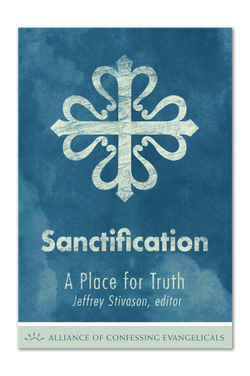
Those who are in Christ have been justified before God. But salvation means much more; it means that we are sanctified, that God actually leads us into holiness. As Michael Allen and company explain, our holiness is carried out in the present work of our sovereign, loving God. In Christ we are given life, not simply in name, but in fact. Praise the Lord, who delivers His children through every weakness. Though you struggle with sin, do not be discouraged; it is God who works in you, "both to will and to work for his good pleasure" (Phil. 2:13).
Past Episodes

Featured Offer
Those who are in Christ have been justified before God. But salvation means much more; it means that we are sanctified, that God actually leads us into holiness. As Michael Allen and company explain, our holiness is carried out in the present work of our sovereign, loving God. In Christ we are given life, not simply in name, but in fact. Praise the Lord, who delivers His children through every weakness. Though you struggle with sin, do not be discouraged; it is God who works in you, "both to will and to work for his good pleasure" (Phil. 2:13).
About Alliance of Confessing Evangelicals
The Alliance of Confessing Evangelicals exists to call the twenty-first century church to a modern reformation that recovers clarity and conviction about the great evangelical truths of the gospel and that then seeks to proclaim these truths powerfully in our contemporary context.
About Alliance of Confessing Evangelicals, Inc
The Alliance of Confessing Evangelicals is a broadcasting, events, and publishing ministry that exists to call the twenty-first century church to a modern reformation. Our broadcasts/podcasts include
The Bible Study Hour
with James Boice,
Every Last Word
featuring Philip Ryken,
Mortification of Spin
with Carl Trueman and Todd Pruitt,
Theology on the Go
with Jonathan Master and James Dolezal,
and Dr. Barnhouse & the Bible
with Donald Barnhouse.
These broadcasts air daily and weekly on stations in the United States and Canada and on the Internet. Event audio includes the Philadelphia Conference on Reformed Theology, the Reformed Bible Conference, and many others.
Contact Alliance of Confessing Evangelicals with Alliance of Confessing Evangelicals, Inc
Alliance@AllianceNet.org
http://www.alliancenet.org/
Alliance Of Confessing Evangelicals
600 Eden Road
Lancaster, PA 17601
1-800-956-2644