
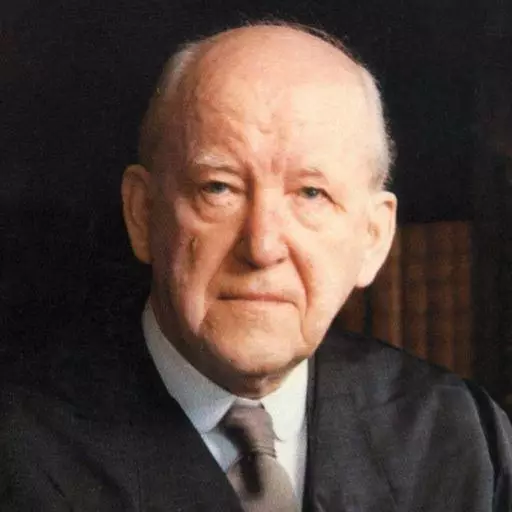
God Has Received Him


Dr. Martyn Lloyd-Jones: Most of you will remember that we are dealing with the verses at the beginning of the 14th chapter of Paul's Epistle to the Romans. Let me read the first four verses.
Him that is weak in the faith, receive ye, but not to doubtful disputations. For one believeth that he may eat all things, another who is weak, eateth herbs. Let not him that eateth, despise him that eateth not. And let not him which eateth not, judge him that eateth. For God hath received him. Who art thou that judgest another man's servant? To his own master he standeth or falleth. Yea, he shall be holden up. For God is able to make him stand.
Now, we are here at the introduction of the Apostle's consideration of this question of what to do and how to get along together about things that may be described as being indifferent. That means things about which we've not got a clear and a specific commandment. Now, he takes up as his first example this question of eating.
Some, he says, the stronger, those who are stronger in their understanding of the faith, they believe and realize that they can eat anything and they do so. But there are others who are weak in their understanding and troubled in their over-sensitive consciences and will eat nothing but herbs. Because they feel that that is the way of avoiding getting into trouble.
Now, the Apostle shows that there is a danger in connection with both those attitudes. The danger of the stronger brother is to despise the weaker brother. But the danger of the weaker brother is to judge the stronger brother. Sometimes the weaker brother judges the stronger brother even to the extent of suggesting that he can't be a Christian because he does certain things which he, the weaker brother, believes should not be done.
We showed that he does this because he's governed by a spirit of fear. But his real trouble is this, that he tends to make these things which are indifferent, central and all important. And he tends to decide whether a man is a Christian at all or what kind of a Christian he is in terms of these details of conduct.
Now, we ended by saying that this is nothing but sheer legalism, which in the end, of course, becomes guilty of denying the great doctrine of justification by faith only. Because if you say that what makes a man a Christian is that he doesn't drink, or he doesn't smoke, or he doesn't eat meats, and so on, well then you are saying that a man is justified by works and not by faith. And of course that is always fatal.
That's the difficulty with this weaker type of brother. That though he has believed the central truth as regards salvation, when he comes to work it out in various details, unconsciously he denies the things that he has already believed. This is why of course, we all have to grow in grace and in the knowledge of the Lord. That is why we need to be taught. That is why the ascended Lord, when he ascended up on high, gave not only apostles and prophets and evangelists but also pastors and teachers.
That's why all this becomes necessary. Well now, we showed that this is not some first century problem and that our interest in all this is not merely theoretical or academic. These very problems are still with us. And I gave some examples of it. Temperance movements and things like that becoming too central in the life of the church. Whether indeed they are admissible at all into the life of the church is a matter which is worth considering. But when they are made central, then certainly we have crossed the line and have been guilty of this very thing with which the Apostle is here dealing.
And I also pointed out how in many evangelical circles and societies, there is the tendency to impose a pattern of living and of conduct and of behavior upon converts. The moment a man is converted, "Now they say you do this, that and the other." Somebody was reminding me at the close last Friday night, that she had been in such a church and was told amongst the instructions that the first thing she got to do was to buy an alarm clock. The moment you're converted, you buy an alarm clock so that you get up and you have your prayer and you read your portion of scripture at a given hour.
And the teaching is virtually, if you don't do that at a particular hour in the morning, well it's doubtful whether you've become a Christian at all. Now you're familiar with this kind of tendency, this these little legalisms that tend to come in. The motive is always very good of course, as was the motive of these weaker brethren in Rome. But the question is, is the teaching in accord with the fundamental doctrines of the Christian faith? Now then, there's the problem. How does the Apostle deal with it?
Well, the first answer he gives is at the end of the third verse. God hath received him. Let not him that eateth despise him that eateth not. And let not him which eateth not, judge him that eateth. Why not? Well the first answer is, for God hath received him. Now here is a tremendously important statement.
Here is the thing that decides whether a man is a Christian or not, says the Apostle. It's God who decides that, not whether a man eats meats or eats herbs. It's God who decides this. God hath received him.
Now this I say is important for us for this reason. That as I've been indicating, there is always the danger, the tendency indeed in some people in the Christian church to go beyond the Lord himself and to invent rules and regulations and tests which cannot be justified by the scripture. Now this is this is as I say, a most important matter, because people make themselves and make others often times very unhappy by doing this kind of thing. Grave injustices have often been done. Great trouble has often entered into the life of the church.
So I want to open this out just a little for you. Now, there is the danger of our making rules for ourselves, which go beyond anything that is taught us in the scriptures. And we become legalists without knowing it. I don't recall whether I've ever told you before in this meeting, I have a faint recollection that I did mention it once on a Sunday.
What I was told by one of the most godly men I have ever known, who was a principal of a very fine evangelical theological college or seminary. And this man told me that in his younger days, as a young Christian, he had passed through a stage of legalism. He didn't realize it at the time, but he came to see that what he was doing was sheer legalism. And this is what he told me he had done.
He was so concerned about keeping the Lord's Day and of not violating it in any way. He was so anxious to be right about this and regarded it as so essential to his whole Christian position. No work must be done on a Sunday which can be done on Saturday or on Monday. He was so concerned about this that he passed through a phase and let me say this, this man was an unusually brilliant intellect. He broke all records at the university, I think it was Aberdene.
Broke all records. He was an outstanding genius. But he went through a phase of legalism, in which, in order as he then saw it, to keep the Lord's Day, he used actually to put on his boots and tie them up on Saturday night, in order that he shouldn't do so on Sunday morning. He did that for some time, and suddenly he realized that this was sheer legalism, that this was as it were making the teaching of the scripture ridiculous. And he got emancipated out of it. He told me the story himself.
Now I give you just that one example to show you how we can go beyond the scriptures, beyond the teaching of God himself, and so elevate certain details which are not specified in the scriptures. Indeed, what he found of course was that he was guilty of the very things that the Pharisees were guilty of. You remember the Pharisees were always challenging our Lord about things like this. He healed a man on a Sunday. They said, "You shouldn't do that. That's a work." Or when the disciples were picking out grains of corn, you remember, passing through a cornfield on a Sunday, they objected to that and so on. He saw that it was the spirit of the Pharisee, that it was legalism. And so he got his liberty.
Now, we do it sometimes with ourselves. But there is always the tendency to do it with respect to others. I'm talking about this tendency of judging others and of judging them by standards that we ourselves have set up. Now, there's a famous example of this of course, in the case of the disciples with our Lord during the days of his flesh. You remember it's recorded in the different Gospels. I'm taking it out of the gospel according to St. Luke in chapter nine, verses 49 and 50.
And John answered and said, "Master, we saw one casting out devils in thy name, and we forbade him because he followeth not with us." And Jesus said unto him, "Forbid him not. For he that is not against us is for us." They were wrong. They were setting up a standard and a test which our Lord condemned. Because they were not following with them and like them in every respect, they therefore felt, they are not followers at all, and they have no right to be doing this. But what they had omitted to notice was that this man was casting out devils in the name of the Lord. And that according to the Lord is the thing that matters, not the question of the following. Now, here is the principle with which we are dealing.
So you see, our Lord himself had to deal with it in his own ministry, as well as the Apostles in their ministry. Now this is something that still continues. And as we are living in the age in which we live, when this whole question of church unity is so much before us. And of course, we all should be interested in church unity on condition that we know what a church is, and that we don't believe merely in institutions and some mechanical organization. And as long as we agree that Luther was right in what he did with respect to Rome, and so on, but we should all be anxious to be one. Our Lord himself has told us this in John 17.
Very well. But now, you know, the history of the church shows that people have divided and have separated wrongly and have been guilty of schism. And generally because they have exalted something to a central position which should not be put in a central position. So this is really of very practical importance at the present time.
Some of us hold the view that there's only one great division of what is called the church. There is the world church, that the ecumenical people talk so much about and which is going to include the Roman Catholic Church, and there is the churches of those who are evangelical. And it's their business to come together, hence these meetings next week. But now, there are difficulties. Because as things are now, Christian people are divided even at the Lord's table.
You're familiar with this. How people are not allowed to take the bread and the wine together in memory of our Lord's death for them. Some exclude from that purely in terms of conduct. I remember being at a communion service in which the man who was to administer the sacraments, or whatever you may like to describe it, laid it down quite plainly that anybody who possessed a television set had no right to take of the bread and the wine.
Now, the question is, you see, where did he get his authority from for saying that? The answer is, he had no authority from the scripture whatsoever. He and others agreeing with him, have decided on this. They have drawn up certain rules and regulations. Now, you see, they put it, they carry it as far as this. You are not allowed to declare the Lord's death till he come, because you have a television set, or whatever it is that they've decided that a Christian mustn't do.
Now this is a this is just a modern example of this whole question. Well then, there are others as you know. You may attend a service in their church and they're very glad to welcome you and so on. But then you come to the communion service. And there are some who will not allow you to take the bread and the wine in that service unless you've been baptized by immersion as an adult. That's the thing that ultimately decides whether you are to have fellowship in declaring the Lord's death till he come.
They know that you believe in his death, as they do, that you believe in justification by faith and so on. But you are not allowed to declare the Lord's death till he come with them, because you've not been immersed in your baptism as an adult on confession of faith. And then there are others as you know. Their test is, have you been confirmed by a bishop? Because if you haven't, they won't allow you to come to the communion table and to declare the Lord's death till he come.
Now these are facts, as you know. And all these are but examples of this same principle of man-made regulations which cannot be justified at all in the scriptures, but which have become divisive and separate Christian people and refused them at one of the most sensitive and glorious points in the whole of the Christian economy.
Now this thing can even be quite ridiculous and ludicrous. A recent book, the title of which is Power Without Glory by Professor Henderson of Glasgow University, which is incidentally one of the most notable attacks upon the ecumenical movement that has ever appeared. He points out there how he was asked to address or to teach at a school for chaplains in the army. And he was the chief lecturer for a whole week. And there were chaplains there from the different denominations. No, no, they were they were they were exclusively Anglicans. This was the point they were exclusively Anglicans. And he was the lecturer at their invitation.
But they decided to have a communion service at the end of this week of instruction. And the ludicrous thing was that this very Professor Henderson, who'd been lecturing to them all the week, was not allowed to take part with them. But there was something even more ridiculous than that. Amongst these chaplains there was a Norwegian. And the professor noticed that the Norwegian had attended this communion service. Obviously he'd been invited. He, the professor, had not been invited. But this Norwegian chaplain had been invited. And Professor Henderson was struck as this was odd because he happened to know that the Norwegian church is not recognized by the Church of England in this matter of communion.
So he went to this man and said, "Well now, how does it come to pass that you were allowed to attend the communion service?" "Oh, I wasn't of course," he said, "I didn't expect it. I'm a Church of Scotland." But how is it that you were allowed to go there? Well, the man burst out into laughter. He said, "It's extraordinary. It's purely an accident." And this is the story he said. He was a Norwegian and he'd been to the seminary in Norway, and had been trained. But just before he was ordained, the Germans had entered into Norway in 1940. He had managed to escape to Sweden. And as he'd gone through all his training and was ready to be ordained, he submitted to ordination by a Swedish bishop. He belonged to the Lutheran Church.
So he was ordained by a Swedish bishop, though he is a Norwegian, entirely as the result of the accident of war. And because of that accident, he was allowed to come to the communion service. If he'd been ordained by a Norwegian bishop, he would not have been allowed. But because it happened to be by accident a Swedish bishop, he is allowed. Now, I'm telling you this story for one reason only: to show you the ridiculous position in which we arrive when we exalt and elevate these man-made regulations and make them central, even in a matter of declaring our Lord's death until he come.
Men who believe in this same Lord are divided by these regulations. That's the very thing which the Apostle is dealing with. Well now then, says someone, is it as simple as that? Isn't all this the result of the problem of discipline? Well in a sense it is. And we must believe in discipline. And yet you notice that it's very interesting to observe the way in which the New Testament teaching deals with these things.
What the Apostle says about people coming to the Lord's table is this: Let every man examine himself. That's where he puts the onus. Let every man examine himself and so let him partake. But we've got to go a little bit beyond this. The teaching of the scripture is clearly that if a man is guilty of some flagrant sin, if a man is living in sin, well then he is to be disciplined and he is not allowed to partake like this. The church has to discipline. That's perfectly clear.
But having said that, surely then the whole emphasis of the scripture is upon the spirit. That our object should not be to exclude people, but to invite them, and to rejoice in their coming. And everything is to be done in a spirit of love and in a spirit of charity. Now this is the Apostle's way of dealing with it here. He says, "Now, who are you to say that that man's not a Christian because he eats meat?" "Who are you to exclude him?" "Who are you to say that he's not fit to come to the communion table and to partake of the Lord's Supper?"
You say, "You know," says Paul, "God hath received him." And if God has received him, what right have you to refuse him? That's his argument. And it is still the argument. It is the teaching of the whole of the New Testament.
But now, wait a minute. There's a problem that comes in at this point which is again most interesting and most fascinating. Some people think that the Apostle Paul was guilty of contradicting himself in connection with these very matters. Now here, you see, he seems to say, and we shall see it more clearly as we go on. He seems to say that these matters are indifferent. That's his whole argument. And he appeals for charity.
But when you go on and read what the same Apostle says in the Epistle to the Galatians, in the fourth chapter and in verses 8 to 11, you think at first that he's contradicting himself. Let me read them to you. He's dealing now, he tells them in verse 7, "Wherefore thou art no more a servant, but a son. And if a son, then an heir of God through Christ. Howbeit then, when ye knew not God, ye did service unto them which by nature are no gods. But now, after that ye have known God, or rather are known of God, how turn ye again to the weak and beggarly elements, whereunto ye desire again to be in bondage? Ye observe days, and months, and times, and years. I am afraid of you, lest I have bestowed upon you labor in vain."
He's there condemning them, and condemning them very strongly. As he was condemning those of them who said that it was not enough for a man to believe in the Lord Jesus Christ, that he must also be circumcised. In Galatians, it is condemnation. But here in Romans, it doesn't seem to be. Or again, take it as you've got it at the end of the second chapter of the Epistle to the Colossians.
Verse 16 and following. "Let no man therefore judge you in meat, or in drink, or in respect of an holy day, or of the new moon, or of the Sabbath days, which are a shadow of things to come; but the body is of Christ. Let no man beguile you of your reward." He tells them, "Don't listen to these people." It's condemnation. "In voluntary humility and worshiping of angels, etc., etc. These people who teach, 'touch not, taste not, handle not,' which all are to perish with the using; after the commandments and doctrines of men." He's strong and it's condemnation.
Now then, how do we answer this? Is the Apostle contradicting himself? Here in Romans, apparent leniency, toleration, refusing to take sides. In these other places, strong, almost stern condemnation. What is what is the justification of the Apostle? Is he contradicting himself? Of course, the answer is he is not contradicting himself. Well then, how do we explain what he's saying? And the answer is perfectly simple.
In this matter here before the church at Rome, he's dealing with weakness, scrupulosity. These people were unhappy because of their weak understanding of the faith, and they'd got this scrupulosity and hyper-sensitive conscience. So when the Apostle finds that, he's lenient with it, and he bears it.
But when it is made something which is absolutely essential, as it was particularly in the case of the Galatians, well then he just condemns it root and branch, and he'll have nothing at all to do with it. He's prepared to accommodate in the case of helping the weaker brother. But when these brethren get up and they become lawmakers and lay down conditions and say you're not a true Christian unless you do what they say, then there is nothing but sheer condemnation.
Now, this is so interesting that I want to give you another example of where the Apostle appears to be contradicting himself. Now, in the 16th chapter of the Book of the Acts of the Apostles, we read this. "Then came he to Derbe and Lystra, and behold, a certain disciple was there named Timotheus, the son of a certain woman which was a Jewess and believed, but his father was a Greek, which was well reported of by the brethren that were at Lystra and Iconium. Him would Paul have to go forth with him, and took and circumcised him because of the Jews which were in those quarters, for they all knew that his father was a Greek."
Now there it is in Acts 16. But then you notice what we read at the beginning in Galatians 2, where the Apostle says this, "But neither Titus who was with me, being a Greek, was compelled to be circumcised: and that because of false brethren unawares brought in, who came in privily to spy out our liberty which we have in Christ Jesus, that they might bring us into bondage: to whom we gave place by subjection, no, not for an hour; but that the truth of the gospel might continue with you." He circumcises Timothy. He absolutely refuses to allow Titus to be circumcised.
You say that's nothing but sheer, blank contradiction. No, the answer is, it is still not contradiction. The Apostle is still operating on exactly the same principle. But let me give you one further bit of evidence before I state the principle quite boldly and baldly. You remember the council that was held in Jerusalem? It's reported in the 15th chapter of the Book of the Acts of the Apostles. There was difficulty over these Gentile converts. Should they be made to submit entirely to the Jewish law?
And the conclusion that the council arrived at was, "No." But they said, "Though we say that they don't have to submit to the law and do everything as if they were Jews," they did decide that there were certain things which ought to be observed. My sentence is, says James who was presiding, "that we trouble them not which from among the Gentiles are turned to God: but that we write unto them, that they abstain from pollutions of idols, and from fornication, and from things strangled, and from blood."
Was that a compromise? The answer is, "No, it was not a compromise." It was a decision taken in terms that I'll point out to you. Then you notice what we read together in Acts 21. Here is the Apostle Paul of everybody, the Apostle to the Gentiles. This man who of all others was given to preach this doctrine of justification by faith only. When he goes up to Jerusalem, you remember, the authorities there, the apostles and others, they took him aside, and they said, "You know, there's a lot of trouble about you. People are misunderstanding. The Jews don't understand what you're doing."
They said, "There's a rumor going round that you teach all the Jews which are among the Gentiles to forsake Moses, saying that they ought not to circumcise their children, neither to walk after the customs," and so on. And then they said, "Look here, what we suggest to you is this. We've got four men here who've got a vow on them. Take them, purify thyself with them, and be at charges with them, that they may shave their heads. And all may know that those things whereon they were informed concerning thee are nothing; but that thou thyself also walkest orderly, and keepest the law."
And then they they quote the decision of the church in Acts 15. "Then Paul took the men, and next day purifying himself with them entered into the temple, to signify the accomplishment of the days of purification," and so on. Was the Apostle acting here inconsistently? Well, you see, there's a principle that governs his actions in these cases I've cited, as well as in his teaching, here as in contradistinction to Galatians 4. And it is this. That the Christian must do everything he can to avoid giving offense. This seems to have been the teaching of the early church.
Here were these Jews. They'd become Christians. Yes, but as we have already seen, they were not clear about these things. And the Apostle says, "We mustn't offend them." Not only the Apostle, the whole council in Jerusalem decided the same thing. That's why Paul again acceded to their requests here in Acts 21. He was a Jew himself. Now he wouldn't allow the Gentiles ever to be forced to do these things. But if it's going to help the Jews to come to a full understanding of the faith, well, he's prepared to do things that he regards as being quite indifferent in and of themselves, simply in order to avoid trouble and misunderstanding.
He is prepared to help those who are in a genuine difficulty. In other words, it is perfectly clear that the early church, with the wisdom that was given to it by the Holy Spirit, saw that it was in a period of transition. And that they mustn't make absolute laws of these things. So they moved slowly. They laid down the great obvious principles. And when somebody comes along and says, "Look here, all these Gentiles have got to be circumcised and go right under the law," they said, "Not at all. We won't have that." But at the same time they say, "Avoid giving offense as far as you can. And if there are certain things that are indifferent, well, let's just ask the people to observe them." That is what they decided. That is what they did.
And the great Apostle obviously is reasoning and arguing on those premises and on those principles. Help the weak as much as you can, but never allow the weak to become a dictator. Avoid causing offense to people. Try to enlighten them and be patient with them. Be long-suffering. Show them that you're prepared to go as far as you can in order to placate them and in order to help them. But never forsake principles. Never go back on something that is absolute. And never allow their weaknesses to become the guiding principles of church government and church order. And above all, never allow them to decide in this way as to who is a Christian and who isn't.
Now, that's the justification of what appears to be a contradiction both in the teaching and the practice of the great Apostle. There is no contradiction at all. He's got the interest of the gospel at heart. Here he is the great Apostle to the Gentiles and everybody knew that. And it was a tremendous thing for Jews, and men like Paul especially, to be even prepared to receive Gentiles and to see the possibility that a Gentile could ever be right with God. Well, they've seen this great thing. But there are these nervous Jewish Christians in Jerusalem. Now they say, "Don't make it more difficult for them. Don't aggravate this thing. Do you mind joining these men who have taken this vow? Do you mind shaving your head with them?"
And the Apostle said, "No, I'm perfectly ready to do this." And he did it. What's shaving the head? What's taking a vow? He's not he's not forsaking any principles. He's standing still absolutely on his gospel, in his own belief, and in what he teaches to the Gentiles. But he's prepared in order to avoid a scandal, in order to avoid a row, in order to avoid trouble in Jerusalem. He's prepared to do this for the sake of peace and for the sake of the spread of the gospel.
Now, that's the great principle. And it's of course a tremendously important principle. If only the church had always held to this teaching. All right. But that leaves us with a final question for this evening, doesn't it? It's all very well to say, "God has received him," but how do we know that God has received him? This is the point at issue. The weaker brother tends to say, "I'm only happy about a man, I'm only happy that God has received the man if he eats nothing but herbs." That's patently wrong. That's the thing he's condemning.
And his answer is, "God has received him." Well, how do we know that God has received him? And surely the answer is this. This is the teaching of the scripture itself to guide us. There are certain statements in the scripture which entitle us to receive a man. For instance, "God so loved the world, that he gave his only begotten Son, that whosoever believeth in him should not perish, but have everlasting life." "God sent not his Son into the world to condemn the world; but that the world through him might be saved. He that believeth on him is not condemned: but he that believeth not is condemned already, because he hath not believed in the name of the only begotten Son of God."
Here is a test. Does he believe or does he not believe on the only begotten Son of God? There's an absolute test. Justification by faith only. What I'm saying is this, if a man professes this faith, if a man says, "I see that I'm a sinner, that I'm completely hopeless, that my works are useless. I rely only on the fact that the Son of God has died for me and for my sins. I have nothing else to rely upon at all." If a man makes that confession, God has received him.
Very well. But wait a minute, we must add to that. This is what he says. This is his profession. And that gives us this strong presumptive evidence that this man is a Christian. But if in addition to that, he expresses a desire to join a Christian church, and to leave the company of the world and to become part of the company of God's people, this surely again is evidence that God has received him.
And then you add to that his general conduct and behavior. Now, notice I'm putting it in terms of his general conduct and behavior. He may do certain things that I'm not quite happy about, as this question of eating meats or only eating herbs. That's not the question at issue. If this man in general is living a life that is consistent with his profession, and the kind of life that is indicated here in the New Testament and its teaching, I say that we are entitled to say that God has received him.
We may be wrong. We may be misled. There are people like those people described in the beginning of the sixth chapter of the Epistle to the Hebrews. That doesn't matter. What we are to be concerned about is this: that we don't exclude a man wrongly. If in charity and as far as we can tell by these scriptural tests, the man seems to us to be indicating that he is a Christian and that therefore God has received him, we must not reject him. You can take the first Epistle of John and apply those tests. There, "We know that we have passed from death to life because we love the brethren," and so on.
Well, if a man gives that impression, and if he's anxious to learn, if he's anxious to enter into a deeper knowledge of the truth, if he's got a concern about the lost, if he's interested in the propagation of the gospel and the spread and the increase of the Christian church, I say God has received him. And we must not refuse him. That's what the Apostle is arguing. And of course, it is quite clear that in the New Testament, and I would say today also, there is yet a further test. And you remember how we are told about this in the Book of the Acts of the Apostles.
It's a tremendous statement this. The Apostle Peter, you see, was a Jew, and he was in trouble in his early Christian life about these very matters. You remember how he had a vision. It's described in the 10th chapter of the Book of the Acts. And he saw this sheet coming down from heaven containing these various kind of beasts, wherein were all manner of four-footed beasts of the earth, and wild beasts, and creeping things, and fowls of the air. And there came a voice to Peter saying, "Rise, Peter; kill and eat." But Peter said, "Not so, Lord; for I have never eaten anything that is common or unclean."
And the voice spoke to him again the second time, "What God hath cleansed, that call not thou common." And this was done three times. And Peter still doubted in himself what this vision which he had seen should mean. And then the men come from Cornelius. And the invitation for him to go there, and he sent, and he preaches the gospel. And what we read is this, "While Peter yet spake these words, the Holy Ghost fell on all them which heard the word. And they of the circumcision which believed were astonished, as many as came with Peter, because that on the Gentiles also was poured out the gift of the Holy Ghost: for they heard them speak with tongues, and magnify God." Then answered Peter, "Can any man forbid water, that these should not be baptized, which have received the Holy Ghost as well as we?"
And he commanded them to be baptized in the name of the Lord. What's all that? It's just another way of saying this. Peter said, with evident that God has received these people. And if God has received them, who am I to refuse to baptize them? It's the Apostle Paul's argument. God has received them. He knew that God had received them because the Holy Spirit had fallen upon them. They were giving evidence that the Holy Spirit had fallen upon them. Their appearance, their manner, their speaking in tongues, these were some of the evidences. And there are many, many evidences of the descent of the Holy Ghost, the baptism of the Holy Ghost upon a man. It isn't only speaking in tongues. Men can be baptized with the Holy Ghost and never speak in tongues. But it's obvious that they have been baptized with the Holy Ghost, you can see the difference in them.
And so the Apostle argues, "Can any man forbid water that these should not be baptized?" And then he's more or less taken to task for this. So you find in Acts 11:17, he says here to the people of Jerusalem, "Forasmuch then as God gave them the like gift as he did unto us, who believed on the Lord Jesus Christ; what was I, that I could withstand God?" God has received them. And who am I to withstand God?
Now, those are some of the ways in which we can be sure that God has received them. And so what the Apostle is saying here to the weaker brother is this: Don't you refuse to receive that man. Don't you judge that man. Don't you say that that man is not a Christian because he eats meat. God has received him. And if God has received him, you've got to receive him.
Now, you see the relevance and the importance of this particular argument. We are all inheritors of traditions. And this is one of the great problems in the life of the church always. As I've already said, to me this is one of the most important matters just at this present time. If evangelical people are going to continue in condition, in a condition of separation and division, and refusal to come together at the Lord's table, though they know that they are equally the children of God, that God has equally received them. If they, because of positions they've inherited, and which they've often never thought through at all, but they're simply standing on a tradition. It's always been like this.
If they're going to do that, well then they deserve richly to go down in utter defeat, and into utter forgetfulness. There is no statement in the scripture that is more urgently relevant just at this moment than this very thing that we are considering together. My friends, let us be careful that we do not refuse people whom God has received. Now, don't forget the principle. There are certain things that are absolute. There's no discussion about them, we're not dealing with them.
We are dealing with things that are indifferent. And the danger we've got to avoid at all costs is that we put man-made regulations into a central position, which even divides Christian people at this elevated, exalted point, where they come to declare the Lord's death. The breaking of his body, the shedding of his blood for their redemption until he shall come again.
Well, may God give us all grace to examine ourselves in the light of these great principles. The Apostle will go on to elaborate his answer and to give us yet further reasons for abiding by this general injunction. Oh, Lord, we come to thee again, and we thank thee that we can come to thee. For we find that we are all sinners, and we are all guilty before thee. We bless thy name that it is thy grace that covers us. We see how we condemn ourselves in condemning others. And we know that we are all saved by grace. That there is none righteous, no, not one. And that we are all equally saved by grace through faith.
Oh, give us of that grace we pray. So that we may understand this teaching, and above all, put it into operation and practice in our daily lives. Lord, hear us. Have mercy upon us. Forgive us for the bigotry that's in us all. And fill our hearts with thy love and thy compassion. Thy long-suffering and thy peace. And above all, the concern for one another and our welfare together in thy church and to thy glory. Lord, hear us.
And now may the grace of our Lord and Savior Jesus Christ, and the love of God, and the fellowship and the communion of the Holy Spirit, abide and continue with us now this night, throughout the remainder of this our short and uncertain earthly life and pilgrimage, and evermore. Amen.
Featured Offer

Find peace and comfort this season with your complimentary guide that includes access to 6 free bonus sermons on overcoming spiritual depression from Dr. Martyn Lloyd-Jones, one of the church’s most beloved Bible teachers. Topics include: true Christians can and do struggle with depression, recovering the joy of your salvation, dealing with crippling guilt over past sins, dealing with yesterday’s haunting regrets, encouragement to keep moving forward, and understanding God’s purpose for suffering.
Past Episodes
This ministry does not have any series.
Featured Offer
Find peace and comfort this season with your complimentary guide that includes access to 6 free bonus sermons on overcoming spiritual depression from Dr. Martyn Lloyd-Jones, one of the church’s most beloved Bible teachers. Topics include: true Christians can and do struggle with depression, recovering the joy of your salvation, dealing with crippling guilt over past sins, dealing with yesterday’s haunting regrets, encouragement to keep moving forward, and understanding God’s purpose for suffering.
About From the MLJ Archive
From the MLJ Archive is the Oneplace.com hosted ministry of the MLJ Trust. Our mission is to promulgate the audio ministry of Dr. Martyn Lloyd-Jones.
About Dr. Martyn Lloyd-Jones
Contact From the MLJ Archive with Dr. Martyn Lloyd-Jones
info@mljtrust.org
http://www.mljtrust.org/
PO Box 953
Middleburg, VA 20118