
Timely Tips for Taming the Tongue


The book of Proverbs has many things to say about the tongue. Careful speech is crucial.
Pastor Ray P. Smith: Good morning.
Guest (Male): Good morning. Please stand and turn in your Bibles with me to Proverbs chapter 15. Proverbs chapter 15. We'll be reading verse 1 through verse 7. And it reads:
"A soft answer turns away wrath, but a harsh word stirs up anger. The tongue of wise uses knowledge right, but the mouth of fools pours forth foolishness. The eyes of the Lord are in every place, keeping watch on the evil and the good. A wholesome tongue is a tree of life, but perverseness in it breaks the spirit. A fool despises his father's instruction, but he who receives correction is prudent. In the house of the righteous there is much treasure, but in the revenue of the wicked is trouble. The lips of the wise disperse knowledge, but the heart of the fool does not."
Pastor Ray P. Smith: Well, good morning to each one of you that were not here when I said good morning earlier. I think I said good morning. If I didn't, forgive me. If you have your copy of the Scriptures, I invite you to take them. You don't really have to turn to Proverbs 15 because I'm not actually going to preach from Proverbs 15. But I am going to preach about the tongue, and Proverbs 15 says more about the tongue than any of the other chapters, so I had that section read.
If you do have your copy of the Scriptures and you want to turn to a passage, then turn to James chapter 3. James chapter 3, and I want to just highlight two verses. James chapter 3, verses 7 and 8, and well, okay, three verses, verse 9. Verse 7 says: "For every kind of beast and bird, of reptile and creature of the sea, is tamed and has been tamed by mankind. But no man can tame the tongue. It is an unruly evil, full of deadly poison. With it we bless our God and Father, and with it we curse men who have been made in the similitude, the image, of God."
Father, thank you again for this day. Thank you for your goodness, as always. Thank you for your mercy. It's in your mercy that you allow us to sit at your feet and you allow us to hear from heaven. It is because of your mercy that you intervened. You intercepted us as we were headed for the wrong end zone. You cut us off, and we thank you for that. We were headed for a horrific, hellish, demonic demise, but you captured us and you set us free that we may walk in the liberty of your Son, and we thank you for that.
Now, Father, our desire is to sit at your feet and hear from heaven as you speak to us because we want to represent. We want to know more expertly how to make Christ known, how to imitate him, and how to walk, Lord Jesus, in your ways, your will, as you've commanded in your word. So we still our hearts and our minds, and we ask that you might be pleased to impart with meekness the engrafted word. And we'll be careful not only to receive it but to live it out and to give you the praise, and the honor, and the thanksgiving. Our only request is that the evil one may have no part in anything that takes place for the next few minutes. Speak, Lord, because your servants are listening. We ask these things, Father, in Jesus' name and for his sake, amen.
I shared with you once before, and I'm sure you remember it, this man Kevin Miller. He says, "A friend and I were flying from San Francisco to Chicago. Five minutes before takeoff, a gate agent from the airline came on the plane and said to me, 'Get your bags and come with me.' I got my bags out of the bin and followed her into the jetway. 'Why,' I asked, 'is this a random security check?' She said, 'The captain refused to have you on this flight.'"
"I walked up the jetway, me not realizing I'm probably going to miss this flight and wondering what in the world is going on. In the terminal, she pointed me to the black vinyl seats. 'Sit there,' she said. 'A supervisor will come talk to you.' I'm waiting here, perplexed, looking out the window as the plane I should be on backs away from the gate. I noticed this airline has no more flights to Chicago for 10 hours. I demanded, 'What's going on?' The gate agent says flatly, 'A supervisor will talk to you.'"
"I sit back down. Suddenly it hits me. My friend had been ordered out of the line for a baggage check and thus boarded the plane much later than I. When he came on the plane, I asked, 'Why were you stopped? Was it your beady terrorist eyes? Explosives?' My friend shook his head quickly, gesturing me to shut up. But I'd already said those things. That was what was causing this."
"Soon four uniformed San Francisco cops, revolvers on their hips, walk up to me. 'Do you know why you're here?' 'No,' I replied, 'I was hoping you'd tell me.' 'Isn't there anything you said that caused you to be here?' 'Well,' I said, 'I did make a comment to my friend about looking like a terrorist. I know I shouldn't have said that. I was just making a private joke.'"
"The cop, steel hair and strong jaw, shoots back, 'You can't joke about those things. They may not allow you to fly again in the future.' Another cop grills me. One takes my driver's license and runs a criminal background check. Another calls the FAA to see what they want to do with me. A senior airline rep pulls the cops aside and talks about me. All I can hear is, 'What'd he tell you?' and, 'Well, they're gone, so we can't confirm what they heard.'"
"I'm wondering, am I going to be arrested? Are they going to make me fly on another airline and buy another ticket, probably tomorrow? Are they going to strip search me? Finally, the senior airline rep comes over. 'Who's your friend?' I told him the name. 'How do you spell that?' He disappears, probably to check whether that name matches the passenger manifest on the flight. Great. Now I've gotten my friend in trouble. They're going to hassle him and question him when he lands in Chicago."
"One cop looks down at me, arms folded. 'Tough to let your friend go on the flight and not you, huh?' 'Well,' I mumbled weakly, 'he didn't say something stupid. I did.' The airline rep returned. 'You realize you can't talk about these things. We're in a new day.' 'I know that,' I said. 'It was stupid, and I shouldn't have said it.'"
"Another passenger overheard you and refused to fly on the flight. The captain was told, and he made the decision to remove you from the flight. We've decided to let you fly again on our airline. The next flight goes out at 11:30 tonight. You'll get to Chicago at 5:30 in the morning.' Inwardly I groaned, but quickly said, 'Thank you.' The lead cop looks down at me. 'You win the prize for idiot of the day.' So I sit in the San Francisco airport for nine and a half hours, losing an entire night's sleep, all because of a few stray words."
Words are powerful. Words have impact. Many times we hurl words around, and we don't think a lot about the impact of the words that we hurl until they land and hurt someone. Well, we've been talking about the tongue, right? We've talked about it for two sessions now. I was going to let it go, but I said let me say one more thing about the tongue.
Last week we finished up verses 7 through 12 of James chapter 3. The tongue has problems. The three weeks before that, we talked about the potential it holds, the power of the tongue, the perplexity of the tongue. Last week we looked at the perplexity of the tongue: it's problematic, it's perverse, and it's polluted. We teased those things out. Then this morning, I want to finish that by talking about some timely tips for taming the tongue. Proverbs and the tip or the tips of my tongue. James 3 says no man can tame the tongue. It is an unruly evil.
And we finished our time last week saying that only God can tame the tongue. As we realize the impact of it, we realize how important it is to surrender the use of our tongues to the Lord so that we don't hurt people with what we say. This morning, I just want to take a few minutes and look at a few verses that talk about the tongue.
John Maxwell, in his book *How to Be a People Person*, talks about the five basic wants of people. Five basic wants of people. He says what people want. People want people to encourage them. Everybody wants encouragement. Everybody needs encouragement. Everyone needs someone at some point to pat them on the back and say nice things to and about you. Everyone wants encouragement.
Secondly, people want people to appreciate them for the things that they do or just for their sake. Even if they don't get to do anything, they just want to be appreciated because they matter. Everyone wants to be appreciated.
Number three, people want to be forgiven because they did something that was stupid and they need people to overlook their stupidity. They want to be forgiven. They don't want them to put them in a pigeonhole and hold them there for the next 35 years.
Number four, people want people to listen to them. When I was a teenager, I came down with a bladder infection. I still don't know how, but I had a bladder infection and, at 15, all I know is it hurt when I went to urinate. There was blood. If you've had a bladder infection, you know it's painful.
I told my mom, and she said, "Go up to the barbershop and tell your dad." I'm like, "Not Dad." Even though I'm the one hurting, I didn't want to tell my dad, but I went up there anyway. I said, "Dad, I have a problem." "What's the problem?" he says. "Well, there's blood that comes out when I pee." He looked at me. "What you been doing up there on Shorter Place?" Shorter Place was the place up the street from where the apartments where we lived. All my friends lived there, so I hung out up there, and we played football, basketball, baseball, whatever.
He said, "What you been doing up there? You messing with girls?" "No, Dad." I just wanted him to say, "Son, what is it?" I'm like, "Dad, I'm hurting. I don't know why I'm hurting. Can I get some help?" So finally he stopped grilling me, and he took me to the doctor. Found out I had a bladder infection. So I got treated, and they took out my appendix. I still don't know why, but maybe it was two for one day. I don't know. But I am without an appendix.
But everyone wants someone to listen to them. And then finally, people want people to understand them. Stephen Covey says in his book *The 7 Habits of Highly Effective People*, "Seek first to understand, then to be understood." And if we all lived like that, the world would be a much nicer place.
But in addition to the five wants, John Maxwell, in his book *How to Be a People Person*, talks about the most important words by number. He starts at six. The most important word, number one, is "we," not "I." Many of us have an "I" disease, but he says not "I," but "we." In fact, he says it like this: with one exception, the entire population of the world is composed of other people. You're not the only one. You're not the most important one. Get over yourself.
Number two, the two most important words are "thank you." And you should say that. You should practice saying that. Sometimes you be a gentleman and you open the door for the young ladies and then they just walk by. Home training... well, anyway. You just want somebody to say "thank you." I learned one thing from my oldest son. Every single time, without exception, that my wife cooked for the family and he ate, he got up and said, "Mom, thank you for dinner. Thank you for breakfast." He was always saying "thank you." I appreciated that.
Number three is "all is forgiven." You know that story about the Mexican father? He had a son named Paco, and he didn't know where Paco lived. So he took out an ad in the newspaper and he put in: "Paco, please come home. All is forgiven. Meet me in front of the railroad station tomorrow at noon." The next day, 800 Pacos showed up. Everybody wants to be forgiven.
Number four, "What is your opinion?" What do you think about this? Sometimes the drill sergeant says, "If I want your opinion, I'll give it to you." But no, tell me what you think. Give me your feedback because what you think and what you say matters to me.
Number five, "Oh my, you did a good job. You did a good job." Sometimes we have the gift of critique. And the people can do a good job and we say, "Oh, that's not bad. Of course, you know, you didn't do this." And we point out the one thing that didn't get done of the six things that were supposed to be done, instead of saying, "You know, I appreciate these five things you did. You did a good job there," instead of majoring on what didn't get done.
Number six, "I want to know you better. I want to know you better." Those are relationship words. And if we want to build good relationships, we have to be careful how we use the words that we've been blessed to learn.
So, I want to talk to you this morning about the folly of words. The folly of inappropriate words and then the fruit of appropriate words. Let's talk about the folly of inappropriate words. Words spoken *to* people, number one. Proverbs 12:18 and 15:4 says, "Some people make cutting remarks, but the words of the wise bring healing."
Now, I highlight cutting remarks because it's the thing. The word there for cutting remarks is a word that literally means reckless words. They're not words that were intended to hurt; they're just words that you weren't thinking about and you just threw them out. It's like somebody did something, they're feeling really bad about it because the consequence has popped up, and then they tell you about it. You say, "Well, that's you. You do stupid stuff like that all the time."
Those are reckless words. You didn't really think about and measure the impact of the words; you just said them off the top of your head. And those are cutting remarks. And sometimes it's easy for us to make those kinds of cutting remarks. They're not intended to do harm, but they bring harm. And then when people react to the words, we go into defense mode instead of saying, "Oh, I'm sorry."
Proverbs 15:4: "A soothing tongue is a tree of life, but perversion—twistedness—in it crushes the spirit." That word is deceitfulness, subversiveness. It's kind of like in 2 Samuel 20, you've got Joab. And Joab, he understands that Amasa has been promoted to be the leader of the army in his place. And he don't like that. And so he decides, "Well, I'm going to get rid of Amasa."
So what he does, he goes and he has his sword. Normally, because you're right-handed, you put your sword on your left side so you can grab it. So he puts the sword on his right side and then he lets it fall open. And he walks up to Amasa as if he's going to embrace him and congratulate him. He takes him by the beard, a gesture of friendship, with his left hand and then with his right hand, while Amasa's not looking, he pulls out the knife and sticks him in the ribs and he kills him.
He's coming at Amasa under a guise of friendship. He's kind of like Judas coming up to Jesus and giving him a kiss, but he's seeking really to betray him. When people use words in a subversive way, they're deceitful. They don't mean you good; they mean you harm. It hurts. Because usually they come from people that you don't expect to hurt you like that.
Then there are spoken words *about* people. And I give you a couple of examples. Proverbs 16:28: "A perverse man spreads strife, and a slanderer separates intimate friends."
Past Episodes

About Atlanta Bible Baptist Church
The Bible is the most important book in the world because it contains the best news for the world – the gospel of Jesus Christ! For over 50 years, our passion at the Atlanta Bible Baptist Church has been to tell people about God and help them understand His Word.
About Pastor Ray P. Smith
Rev. Ray P. Smith is the senior pastor of the Atlanta Bible Baptist Church. He follows Dr. John McNeal, Jr., the church’s founder and now Pastor Emeritus. Pastor Smith received his Bachelor of Science degree in Pharmacy from Mercer University Southern School of Pharmacy in Atlanta. He received his Master of Divinity degree from Baptist Bible Seminary in Clarks Summit, Pennsylvania.
Pastor Ray delights in teaching the Word of God, explaining its truths with practical illustrations and applications. His passion, to teach the whole counsel of God to minister to the whole person, flows out of his life verse, which says “And Jesus kept increasing in wisdom and stature, and in favor with God and men” (Luke 2:52). As Jesus grew mentally, physically, spiritually, and socially, so should His followers.
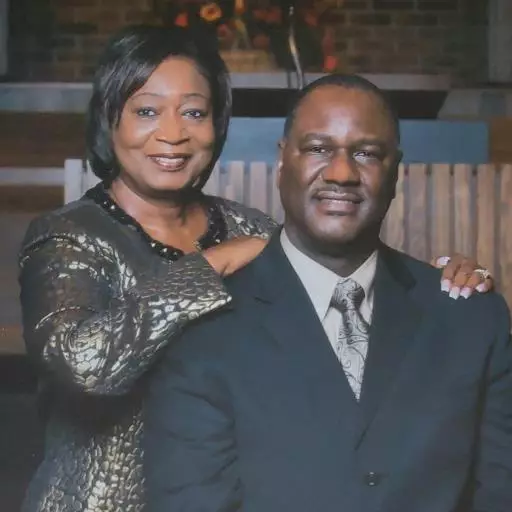
Pastor Ray and his wife, Linda, are the parents of four children, one son-in-law, and two grandchildren.
Contact Atlanta Bible Baptist Church with Pastor Ray P. Smith
abbcinfo@comcast.net
Atlanta Bible Baptist Church
1419 Peachcrest Road
Decatur, GA 30032
(404) 241-1176