

True Unity


In this last section of the High Priestly Prayer, Jesus prays for the apostles and all believers who will come to faith through their message. Reverend Eric Alexander focuses on the unity of the future Church for which Jesus prays. Seek this unity of believers, which will be perfected when we see Him in glory, on Hear the Word of God.
Mark Daniels: Welcome to Hear the Word of God, the online and broadcast teaching ministry of the Reverend Eric Alexander.
Eric Alexander: Well, let's open our Bibles again at John chapter 17. This is the third Sunday evening in which we have been studying John 17, and we're therefore at the third of the three sections into which this astonishing prayer of our Lord Jesus Christ naturally falls. In verses one to five, we found Jesus praying regarding his own glorification. "Father," he says, "the time has come. Glorify your Son, that your Son may glorify you."
In verses 6 to 19, Jesus is praying for his disciples whom he is leaving in the world, and he speaks of them longing that the Father would keep them. "I have kept them in your name; now, as it were," he passes them over to the Father and says, "keep them, Father, in your name, those whom you have given me."
Now, in the last section, verses 20 to 26, Jesus is praying obviously for a much wider company. The contrast is represented in the NIV, if you have it before you, of verse 20 by the words "them" and "those." "Them" are the disciples or the apostles for whom Jesus has just prayed. "My prayer is not for them alone," that is for the apostles alone. "I pray also for those," and "those" turn out to be the entire company of believers who have come to faith through the apostles' message.
So he says, "I pray also for those who will believe in me through their message." What Jesus is obviously doing is looking with prophetic eyes down into the future through the whole of Christian history, right to our own day. So he encompasses us ourselves in this prayer. We are amongst those who have believed through the apostolic message.
This is a description, therefore, of the Christian church from Pentecost to the end of time. It is that company that Jesus in this third section is praying for. Obviously, as I say, that includes ourselves. So you can see the increasing circles of our Lord's great high priestly prayer. He prays about his own glorification and the relationship between himself and the Father. Then the widening circle of his own disciples, the apostles whom he is to leave in the world. And now for all the church of Jesus Christ down through the ages to the very end of time.
There can be little doubt that the main thing Jesus is praying for, for the future church of Christ, is its increasing unity. Three times he prays for this in verses 21, 22, and 23. Notice from verse 20: "I pray also for those who will believe in me through their message, that all of them may be one." Verse 22: "I have given them the glory that you gave me, that they may be one as we are." And verse 23: "I in them and you in me. May they be brought to complete or perfect unity."
Now, there is no question, therefore, what Jesus is praying for, for the future church. He is praying for its unity. These texts are familiar, very frequently quoted in the quest for unity which is often called the ecumenical movement. The word comes, as some of you may know, from a Greek word which just means the entire inhabited earth, so that the church of Jesus Christ throughout the entire inhabited earth might have unity.
But we need to look closely, I think, at what Jesus actually says about unity and about believers being one. Let me spell out for you first of all, by way of a kind of an introduction, the two classical errors that surround us when we come to touch upon this theme that Jesus is praying about.
One is the error often made by the ecumenical movement, as we call it, of mistaking union for unity, of imagining that organizational union between churches or denominations or bodies of some kind is the same thing as unity. That obviously is a great error and a serious one. As a friend of mine who was a leading Presbyterian figure in Ireland before he died used to say, "You can tie two cats' tails together and you have union, but you most certainly do not have unity." It's very obvious that the two things are quite different.
But the other error which pursues us whenever we come to a passage like this is the error which evangelical Christians are more inclined to experience. That is the error of regarding unity in the church of Jesus Christ as dispensable. It is an error because in Jesus' eyes, most obviously, it is not dispensable. It dominates his praying for the church's future. He says, "My prayer is that all of them may be one."
Indeed, so important is this that unity in the church is, says Jesus, a reflection of unity in the Godhead. If you look at verse 11, for example, in the previous section of the prayer, he says, "I will remain in the world no longer, but they are still in the world, and I am coming to you. Holy Father, protect them by the power of your name, the name you gave me, so that they may be one as we are one."
So the oneness, the unity of the Christian church in Jesus' teaching and in his praying is a unity which is a reflection of the unity that exists in the Godhead. "As we are one, I pray that they may be one." So it's vitally important, and we must not allow the false quest for organizational union or ecclesiastical uniformity, which is another quest, to deflect us from the importance of unity amongst believers.
With these two warning notes sounded, let me suggest to you that we need to come to these words of Jesus and ask: what is it that he is praying for as he prays for the future church, that they may be one? There are four aspects of the church's unity to which Jesus draws our attention in this prayer and calls his Father's attention particularly. First, its nature, what it is. Secondly, its means, that is how it may be obtained. Thirdly, its purpose, why it should be desired. And fourthly, its goal, when it will be perfectly achieved. So we are going to think about the nature, the means, the purpose, and the ultimate goal of the unity for which Jesus prays.
First of all then, its nature. What is it? I want us simply to look at what Jesus says and try to grasp from what he is saying how we should be thinking about the unity of Christ's church. The first thing that he says is that its nature is that it's first of all a unity with the apostles. If you look again carefully with me at verses 20 and 21, you will see again these three categories of people. The first described in the word "them," the second described in the word "those," and the third described in verse 21 as "all of them."
Now, Jesus is speaking first about the apostles, then about all those who are going to believe in the future in the entire history to come of the Christian church, and then "all of them" clearly combines together the apostles and all who are going to believe through their message. Now, you notice that last phrase because the point of union between the church which is to come and the apostles is the apostolic message. That is the cement which unites the church of Jesus Christ through all the ages with the apostles.
The first unity that Jesus prays about is a unity between the church in all the ages and the apostles. The unity is formed by belief in the apostolic message. "I pray also for those, not just for them, who will believe in me through their message, that all of them may be one." Now, the way that they are going to be one is by their common belief in the apostolic message.
And that, if you think of it in our own case, is precisely what unites us with one another. Of course, we have come to faith, we have believed, perhaps by the testimony of somebody who was close to us, perhaps by the testimony of preaching, but that testimony is always at secondhand. The primary testimony is the testimony of the apostles to Jesus. And what unites us with one another is a common belief in and commitment to the apostolic gospel.
This is where true unity is found. Now, one could put that in this way and say that true Christian unity, therefore, is unanimity on gospel truth. It goes back to our unity with the apostles. So Jesus' prayer is first and foremost that there might be an historical continuity between the apostolic message and the church in every age.
That is how the church throughout the whole earth is one. Now, if you have traveled anywhere in the world and have come across the church of Jesus Christ existing somewhere, the thing that unites us is that we have a common faith in the same Savior, that we find the same authority for all that we believe and think and do in the apostolic gospel.
That is where true unity has its primary origin. How this operated in the early church is obvious. In Acts chapter 2, for example, we read that the very first thing happened when the church was born was that they devoted themselves to the apostles' teaching. In 1 John chapter 1, when John is speaking about the fellowship that you have with us, he says it comes about this way: "That which we have seen and heard declare we unto you, that you may have fellowship with us." How are they going to have fellowship with the apostles? They are going to have fellowship with them through the apostolic gospel which they have preached.
The same thing is true in Ephesians 2, where Paul speaks of the church being founded, it has its foundation stone on the apostles and prophets, Jesus Christ himself being the chief cornerstone. It's a very important thing for us to grasp that true church unity has as its first mark a unanimity in gospel truth, a unity with the apostles. Unity within the church of Jesus Christ is always fragmented when we find that there is a lack of unanimity on gospel truth. That's a primary area that we need to grasp.
But secondly, our unity is not only unity with the apostles. Do notice in what Jesus says in his prayer, it is unity with the Father and the Son. Now, this is a remarkable thing, but notice how he says it in verse 21, for example: "That all of them may be one, Father, just as you are in me and I am in you. May they also be in us, so that the world may believe that you have sent me."
Now, this is really a very remarkable thing, but we need to try to give our attention to it to grasp what Jesus is saying. He is comparing the unity that he prays that we may have with each other in the church of Jesus Christ with the unity that exists between the Father and the Son. Now, if we are going to think biblically and according to Jesus' teaching on church unity, this is what we need to grasp. The question is: what is that unity between the Father and the Son?
The answer to the question is: it is a unity of essence, of essential being. "He who has seen me," says Jesus, "has seen the Father." The Father is in the Son, and the Son is in the Father, and they are one because they are of the same nature. They are of the same essence. And this is the unity which Jesus compares to the unity he prays for amongst believers.
Now, how do we become one in that sense? As the Father and the Son are one, how do we become one sharing the same nature? Well, the apostle Peter tells us in 2 Peter 1:4. He says by the new birth we become partakers of the divine nature. What happens to us when we are born again? It is that we receive the nature of children of God. We belong to the same family. It is the very divine nature that we receive.
Now, that inevitably makes us one with each other because we're part of the same family of God. We belong to one another and are of the same being because we have been united with the Godhead by the Holy Spirit. The Father is in us, the Son is in us, as the Son is in the Father and the Father in the Son. And Jesus says this is the pattern of true unity.
Now, that's not entirely easy to grasp, but let me tell you what flows from it and you will begin to see more of what it means. You will then recognize why it is that you cannot organize true Christian unity. You cannot arrange it. You cannot produce it. No human being can produce true Christian unity because it depends upon our being united to the Father and the Son.
How do we become united to the Father and the Son? By a miracle of the new birth, by the work of the Holy Spirit to unite us into Christ. And that's where true Christian unity begins. It begins with the new birth when we are born again and are given a new nature. Now, you will see that when that happens, you begin to have a whole new set of desires, a whole new set of priorities, a whole new set of interests, a whole new pattern of life.
And you find that there are other people all over the world who have the same thing happening to them. Isn't that true? I'm looking around this congregation and I can see some of you who are new Christians, and you have found that there are people with whom you've suddenly become one in Jesus Christ. When you have held them by the hand and spoken to them, you have found, "Here is a brother, here is a sister in Christ. I am one with them." There may be a thousand things that divide us—our background, our education, our financial situation—they all may be able to divide us, but it is Christ who unites us.
Now, you see where Christian unity therefore comes from. It comes from believing a common truth and sharing a common life. And that's the origin of true Christian unity. Let me point out to you secondly what Jesus reveals to us in his prayer about the means to the church's unity, how it may be obtained.
And of course, first, it is through an increasing commitment to the apostolic gospel. Sometimes people will say doctrine divides, but Jesus does not seem to agree. It is indeed doctrine, the apostolic message, which unites. And it's through the truth that we are made one. Hugh Latimer, one of the Church of England's reformers and martyrs, wrote, "Unity must be according to God's holy word, or it were better not at all. We ought never to regard unity so much that we forsake God's truth for unity's sake."
So unity comes through the truth. It is a unanimity on the gospel message. That, of course, does not mean that we will agree about absolutely everything that concerns us within the Christian church. We may have different views on peripheral things. We may have varied views on baptism, for example, or on the celebration of the Lord's Supper, or on all kinds of different things. But the gospel, the apostolic gospel, will unite us.
And our union with the Father and the Son will be the basis of our union with other people. If you've no union with the Father and the Son, that is, if you have not known the new birth, you will never know true unity with God's people. But the other means by which unity is obtained is through the deepening of our relationship with the Father and the Son.
How do we foster unity in the church of Jesus Christ? By the deepening of our relationship with the Father and the Son. Look at verse 23: "I in them and you in me. May they be brought to complete unity." It comes through the increase in this union with the Father and the Son. William Temple, the former Archbishop of Canterbury, put it perfectly in this way: "The way to the union of Christendom does not lie through committee rooms, though there is a task of formulation to be done there. It lies through personal union with the Lord so deep and real as to be comparable with his union with the Father." That's not bad for an Archbishop.
The third means by which unity in the church is achieved is by a displaying of the moral glory of the Lord Jesus Christ. Let me say that again. The third means by which unity in the church is achieved is by our displaying the moral glory of the Lord Jesus Christ. Look at verse 22: "I have given them the glory that you gave me, that they may be one as we are one."
So by apostolic truth, by union with the Father and the Son, and thirdly, by displaying the moral glory of the Lord Jesus, we become more and more united. Do you see it? The connection is one that Jesus is spelling out between unity and holiness. And this is one of the reasons that unity is so important in the church of Jesus Christ. Holiness produces it; sin fractures it.
Now, you know that happens in our own experience. Wherever there is a shining of the glory of God in the lives of his children to make them humble, Christ-like believers, there is an increasing sense of unity as we submit ourselves to him and to one another. Where sin enters into our lives and the moral glory of Jesus is obscured, then we begin to be alienated from one another.
I tell you how it happens. We harbor deep-seated resentments. Somebody does something or says something, and it festers like a sore in us. What does that do to unity amongst God's people? It destroys it. Because the glory of the Lord Jesus is one of the means of producing unity amongst his people. And where there are hidden grudges and private hatreds and all manner of malice, then the unity of the church of Jesus Christ will be fractured.
This is the unity for which the apostle appeals again and again. Do you remember? "I beseech Euodia, and I beseech Syntyche, that they be of one mind in the Lord," he says. There is this tendency apparent already in the early church for people to fracture that unity. And Paul has no question what fractures it. It is sin that fractures it, and holiness fosters it. That's why, not as an end in itself, but as a means to an end, as we shall be seeing in a moment, unity is so important. It is often an index of our spiritual condition in the church of Jesus Christ.
Now, thirdly, the purpose of the church's unity, why it should be desired. And you notice what Jesus says: "That all of them may be one, Father, just as you are in me and I in you. May they also be in us, so that the world may believe that you have sent me." Now, here is the fourth area for which Jesus is praying. He prays about his own glorification. He prays about the disciples. He prays about the future church. But now he stretches beyond that to pray for the unconverted world.
Now, how is the world to be brought to faith? How is it to believe that you have sent me, as Jesus says? Well, the unity of believers, their oneness in Christ and their oneness in the gospel, is to be the handmaiden of God to beget faith in the world. Thomas Manton, the man who preached for something like 150 weeks on the 17th chapter of John, of whom I was telling you earlier in the series, he says disunity in the church breeds atheism in the world.
And that's true. Now, I don't think that that applies to our having different denominations. I don't think that people are stumbled by the fact that there happens to be a Church of Scotland church here and a Methodist one up the road. I tell you in my experience what really does make it difficult for people to believe. It is not that we do not all belong to the same denomination. It's not that we do not all worship in the same manner. It is not that we do not all have the same name.
It is that we do not all preach the same message and believe it. And people will say, "What am I to believe? One says I may be brought to God this way, another denies that totally. What am I to believe?" What God says is the apostolic gospel is the secret of true unity.
And here's the last thing, the ultimate goal of the church's unity, where it will be consummated. You will notice that Jesus speaks of that in these last two verses. In verse 26, for example: "I have made known to them and will continue to make known, in order that the love you have for me may be in them and that I myself may be in them." Jesus is going to go on to make himself known to them until that day comes which he describes in verse 24.
"Father," he says, "I want those you have given me to be with me where I am, and to see my glory, the glory you have given me because you loved me before the creation of the world." Now, believers have had a foretaste of that glory, as Jesus says in verse 22: "I have given them the glory you gave me." That is a glory that we begin to be changed to resemble in this life, as Paul tells us in 2 Corinthians 3:18.
But that glory is only a foretaste of the day when we shall see him without any veil between us and him in all his perfect glory. And having a true vision of Christ, then we shall all be one. You will notice in the Book of Revelation, there is not a discordant voice in heaven because they see the glory of the Lord Jesus as he is. "Father, I want those you have given me to be with me where I am and to see my glory."
Now, that's something which in the end of the day will bring perfect unity amongst God's people. But of course, the clearer we see him, the nearer we come to him, the more we will be united with each other. Just think of this, beloved, for a moment. If you have a shepherd in the middle of a field and the sheep are scattered all round the field, and the shepherd stands and calls them to himself, brings them from every corner to himself, the sheep cannot come nearer to the shepherd without coming nearer to each other.
And the nearer we come to Jesus, the deeper our unity will be. So you see these things that Jesus prays for. The end result of it will be that we shall behold his glory, and then all our petty squabbings and all our grudges and all our prejudices will appear for what they really are. I see Jesus here then praying for four things: for truth, for holiness, for unity, and for mission. In the perfect balance in which our Lord thinks of these things, and we need to seek with all our heart this quality of oneness in him and in the truth, which one day will be consummated perfectly when we see him in his glory. May God create amongst us that kind of loving unity so that the world may find it easier and not more difficult to believe that the Father sent the Son to be the Savior. Let's pray together.
Our blessed Lord, we do praise and thank you for your holy word. We pray that you would create amongst us some measure of that godly unity in the truth of the gospel and in the life of the Godhead, for which our Savior prayed. Lord, may his prayer be answered amongst us in these days, that the world may see the beauty of the Savior in us. We ask it for his great name's sake. Amen.
Mark Daniels: You're listening to Hear the Word of God with the Reverend Eric Alexander, a minister in the Church of Scotland for over 50 years. To access more Bible teaching from Reverend Alexander, visit hearthewordofgod.org, where your generous contribution will help us sustain and grow this ministry. That's hearthewordofgod.org. You could choose instead to mail a check to this address: 600 Eden Road, Lancaster, Pennsylvania, 17601. Or call 1-800-488-1888. This program is a presentation of the Alliance of Confessing Evangelicals. I'm Mark Daniels. Thank you for listening. Please join us again next time for Eric Alexander and Hear the Word of God.
Featured Offer
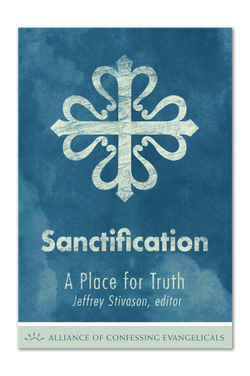
Those who are in Christ have been justified before God. But salvation means much more; it means that we are sanctified, that God actually leads us into holiness. As Michael Allen and company explain, our holiness is carried out in the present work of our sovereign, loving God. In Christ we are given life, not simply in name, but in fact. Praise the Lord, who delivers His children through every weakness. Though you struggle with sin, do not be discouraged; it is God who works in you, "both to will and to work for his good pleasure" (Phil. 2:13).
Past Episodes

Featured Offer
Those who are in Christ have been justified before God. But salvation means much more; it means that we are sanctified, that God actually leads us into holiness. As Michael Allen and company explain, our holiness is carried out in the present work of our sovereign, loving God. In Christ we are given life, not simply in name, but in fact. Praise the Lord, who delivers His children through every weakness. Though you struggle with sin, do not be discouraged; it is God who works in you, "both to will and to work for his good pleasure" (Phil. 2:13).
About Alliance of Confessing Evangelicals
The Alliance of Confessing Evangelicals exists to call the twenty-first century church to a modern reformation that recovers clarity and conviction about the great evangelical truths of the gospel and that then seeks to proclaim these truths powerfully in our contemporary context.
About Alliance of Confessing Evangelicals, Inc
The Alliance of Confessing Evangelicals is a broadcasting, events, and publishing ministry that exists to call the twenty-first century church to a modern reformation. Our broadcasts/podcasts include
The Bible Study Hour
with James Boice,
Every Last Word
featuring Philip Ryken,
Mortification of Spin
with Carl Trueman and Todd Pruitt,
Theology on the Go
with Jonathan Master and James Dolezal,
and Dr. Barnhouse & the Bible
with Donald Barnhouse.
These broadcasts air daily and weekly on stations in the United States and Canada and on the Internet. Event audio includes the Philadelphia Conference on Reformed Theology, the Reformed Bible Conference, and many others.
Contact Alliance of Confessing Evangelicals with Alliance of Confessing Evangelicals, Inc
Alliance@AllianceNet.org
http://www.alliancenet.org/
Alliance Of Confessing Evangelicals
600 Eden Road
Lancaster, PA 17601
1-800-956-2644