
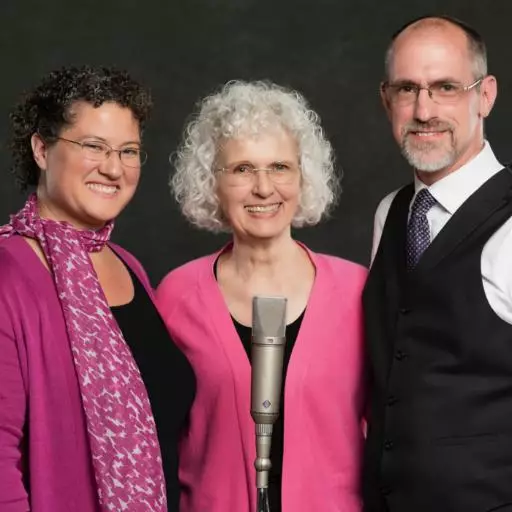
The Spirit of St. Louis


The events leading up to and the famous transatlantic flight of Charles A. Lindbergh
Guest (Male): Hey, sis. Dad, mom, come on. Your story hour is on.
Guest (Male): Presenting your story hour, building for a better tomorrow. Today's story.
Charles Lindbergh: I'm over the Rocky Mountains now, 8,000 ft. I'm glad I don't have to land in those rugged mountains. Now what's wrong? Maybe the gas mixture is too lean. I'm losing altitude. 7,000 ft now. Can this be the end of my dreams? Is my flight to Paris going to end here wrecked in these mountains?
Uncle Jon: Hi boys and girls. This is Uncle Dan.
Aunt Carole: And I'm Aunt Carol. Welcome everyone.
Uncle Jon: We hope you're ready to enjoy a story about one of the world's most famous aviators, Charles Lindbergh.
Aunt Carole: We call it the Spirit of St. Louis. Charles Lindbergh, a young aviator who has barnstormed and piloted mail planes for several years, is determined to be the first to fly non-stop from New York to Paris. After weeks of ceaseless effort, he has managed to get a group of businessmen to finance the venture. He has also found the necessary plane for sale by a New York company and the money to buy it.
Charles Lindbergh: There she is, Scotty, on this slip of paper. A check. Look at it closely.
Guest (Male): $15,000 for the Bellanca plane?
Charles Lindbergh: For the plane in which I'm going to fly to Paris.
Guest (Male): You're as good as in Paris right now.
Charles Lindbergh: Yep.
Guest (Male): Say, let me be the first to congratulate you, Mr. Lindbergh.
Charles Lindbergh: Thank you, Mr. O. E. Scott. All I have to do now is to take this check to New York, pay for the Bellanca, fly it back here, make necessary alterations and repairs, fill it with gas and take off for Paris.
Guest (Male): Ticket, please.
Charles Lindbergh: Yes, sir. Here.
Guest (Male): Okay. One way?
Charles Lindbergh: Yes, sir. I'm going to fly back.
Guest (Male): One of them airplane contraptions? Ain't safe, young fella. Oh, ain't safe. Ticket, please.
Guest (Male): Well, glad to see you again, Mr. Lindbergh. Sit down.
Charles Lindbergh: Here's the check, Mr. Levine. 15,000 the telegram said.
Guest (Male): That right.
Charles Lindbergh: I'm certainly glad you changed your mind about selling it.
Guest (Male): We reserve the right, naturally, to select the crew that flies it.
Charles Lindbergh: You what?
Guest (Male): You understand, of course, that we cannot let just anybody pilot our airplane across the ocean.
Charles Lindbergh: If we buy it, it would be our plane.
Guest (Male): In a way, yes. But after all, we're vitally interested in the performance of our plane on such a flight and we insist on saying who the crew will be.
Charles Lindbergh: We wouldn't be interested in any such arrangement. This is a St. Louis project. If we buy your plane, we'll control it. We'll pick our own crew.
Guest (Male): Your organization in St. Louis would get all the credit of the flight, all the publicity.
Charles Lindbergh: As far as I can see, we'd be paying 15,000 for the privilege of painting the name St. Louis on the fuselage.
Guest (Male): I'm sorry, Mr. Lindbergh, but those are our terms.
Charles Lindbergh: You should have told me this before. It would have saved me a 2,000 mile trip.
Guest (Male): Think it over. I'm sure you'll agree that it's best for us to pick the crew. The Bellanca is the only airplane built capable of flying between New York and Paris.
Charles Lindbergh: I'm sorry, but if you won't sell it outright, the sooner I start looking for another plane, the better.
Guest (Male): You may change your mind, Mr. Lindbergh.
Charles Lindbergh: Just tell me, Mr. Levine, is the plane for sale outright or isn't it?
Guest (Male): I'm afraid not. Goodbye, Mr. Levine.
Guest (Male): Oh, don't be downhearted, Slim. Something will break.
Charles Lindbergh: What? The Fokker, the Bellanca, the Travel Air, Columbia, they've all turned me down.
Guest (Male): Say, the Ryan people in California haven't. And they seem anxious to sell you a plane. And they say they can deliver one in 3 months.
Charles Lindbergh: But will it fly to Paris?
Guest (Male): Why don't you wire for specifications and find out?
Charles Lindbergh: Because I Say, Scotty, that's a good idea. Give me a pencil and paper.
Guest (Male): Here.
Charles Lindbergh: Ryan Airlines, San Diego, California. Uh competition makes time essential. Can you construct plane in less than 3 months? Please wire general specifications. There, how's that?
Guest (Male): Oh, that's perfect. I'll take it down to Western Union.
Guest (Male): Hey, Slim. It's a telegram for you. It's from Ryan Aircraft.
Charles Lindbergh: Quick reply. Yeah, there. Can build in 2 months from date of order. Gas capacity 180 gallons. Cruising speed 100 mph.
Guest (Male): 180 gallons? That's a lot of gas.
Charles Lindbergh: And 100 mph is excellent cruising speed.
Guest (Male): How much gas does a radial engine consume per hour?
Charles Lindbergh: About 10 to 12 gallons, I think.
Guest (Male): Let let me figure that out. Uh she carries 380 gallons at 10 gallons per 100 miles. The Ryan will go It's 3,800 miles.
Charles Lindbergh: And it's only 3,300 miles to Paris.
Guest (Male): It'll do it, Slim. The Ryan will get you to Paris with a safe margin over.
Charles Lindbergh: If they can build a plane to these specifications.
Guest (Male): What? Don't you think they can?
Charles Lindbergh: I'm going to find out after I see Major Lambert and get the approval of my partners.
Guest (Male): That's Slim. Can the Ryan people build a plane that'll fly non-stop to Paris?
Charles Lindbergh: If they can build one according to these specifications, yes.
Guest (Male): All right, Slim. Go and see them. When can you start?
Charles Lindbergh: Within a week. As soon as I can make arrangements for someone to fly my mail route.
Aunt Carole: The Ryan factory is an old dilapidated building near the waterfront in San Diego. As Charles Lindbergh got out of a taxi and advanced toward the office building, two loafers stared at him. Inside the small, dusty, paper-strewn office, a slender young man with clear, piercing eyes and intent face greets him.
Donald Hall: Howdy. I'm Donald Hall, chief engineer.
Charles Lindbergh: How do you do? I'm Charles Lindbergh.
Donald Hall: Oh, yes, yes. Welcome to California, Captain Lindbergh. Come on back to my office.
Aunt Carole: Mr. Hall led Charles Lindbergh through the small office and into a large but sparsely furnished draft room office.
Donald Hall: It's not much of an office, but sit down. We can talk undisturbed.
Charles Lindbergh: I am interested in a plane, Mr. Hall, not a showy office.
Donald Hall: Good, good. And we'd like to build you a plane. What do you think of our offer?
Charles Lindbergh: You quoted a price of 6,000 without an engine. How much would an engine make the total price?
Donald Hall: I'll tell you what we'll do, Captain Lindbergh. We'll build the plane for 6,000 and furnish the engine and all parts for what they cost us.
Charles Lindbergh: Fair enough. But uh how about the performance?
Donald Hall: We spent quite a lot of time figuring that out since you wire that you intend to use a plane for transatlantic flight. And we're sure we can build a plane that'll do it.
Charles Lindbergh: How soon can you start building it?
Donald Hall: Just as soon as you place the order.
Charles Lindbergh: And you'll guarantee delivery in 2 months?
Guest (Male): Probably less. Uh but we won't promise. All right, it's a deal. But I'll have to wire my partners for confirmation and uh the 50% deposit. Here's a check, Mr. Hall, for 6,000 and the official order.
Donald Hall: We will start to work immediately, Slim.
Charles Lindbergh: I'm going to hang around while you build it. Mind?
Donald Hall: No. In fact, we want you to. It would save time. And then when it is finished, you'll have exactly what you want. And you'll know it inside out. Here's the blueprint for the fuselage, Mr. Tindal. Uh have your men start constructing it immediately. Here's another blueprint, Mr. Tindal. Get busy on this one right away. Where do you want the pilot seat, Slim? In front of the extra gas tank or in back of it?
Charles Lindbergh: In back. It's safer that way.
Donald Hall: How about night flying instruments, Slim?
Charles Lindbergh: Don't want any. Way too much.
Donald Hall: And parachutes?
Charles Lindbergh: Same answer.
Donald Hall: Hey, Slim. Would you rather the ship had stability or range?
Charles Lindbergh: Range, Don. Give me all the range I can. I'll keep the plane in the air by sheer force if I have to.
Donald Hall: Push the men hard, Mr. Tindal. We got to finish this plane in another week.
Guest (Male): How's the Spirit of St. Louis coming along, Don?
Donald Hall: Be finished tomorrow, Slim. How's your navigation maps progressing?
Charles Lindbergh: Completely done. Just in time, too. Looks like I'll have to start that test flight tomorrow.
Guest (Male): Yep.
Donald Hall: All right, men. She's ready to take away. Tow her carefully. We'll all meet at Dutch Flats. She's all yours, Slim.
Charles Lindbergh: Oh, she's beautiful. Trim, slender and and gleaming in the morning sun.
Donald Hall: Uh but will she fly?
Charles Lindbergh: Like a bird.
Donald Hall: You hope.
Charles Lindbergh: She will.
Donald Hall: If our calculations haven't been in air.
Charles Lindbergh: We know in a minute. Off. Throttle closed. Contact. Contact. We moved the chocks.
Donald Hall: Good luck, Slim. I'll be seeing you. I hope. It flies. Well, you're back.
Charles Lindbergh: Yep.
Donald Hall: Say, do you realize that you ran only 160 ft when the wheels left the ground? That's a record. How'd she control?
Charles Lindbergh: Well, it needs a few adjustments.
Donald Hall: Good stability?
Charles Lindbergh: No, but we knew it wouldn't be.
Donald Hall: Bigger tail surface will correct that, Slim.
Charles Lindbergh: Yes, but we want range, remember? Not stability.
Donald Hall: Then you're satisfied with it?
Charles Lindbergh: Happy as a lark.
Uncle Jon: We'll get back to our story in just a moment. But first, we want to encourage you to visit our website. Click on products and see for yourself all the great stories we have ready to download and available in CD albums.
Aunt Carole: So visit our website at yourstoryhour.org and take a look.
Uncle Jon: Now it's time to return to the story. The Spirit of St. Louis.
Aunt Nikki: Spirit of St. Louis.
Aunt Carole: The Ryan Company of San Diego, California has just completed building a special plane for Charles Lindbergh. He has made the first test flight and all seems to be as expected.
Charles Lindbergh: We'll make a speed test tomorrow.
Donald Hall: Okay, Slim.
Charles Lindbergh: She made 128 mph, Don.
Donald Hall: Pretty good, eh?
Charles Lindbergh: Wonderful. Tomorrow we'll make load tests.
Donald Hall: She's got 300 gallons in her Slim.
Charles Lindbergh: Yeah, I know, Don. Remove the chocks.
Donald Hall: The wheels left the ground in exactly 1,023 ft, Slim. The curves we ran on her are checking out almost perfect.
Charles Lindbergh: I knew they would, Don. You're a good engineer.
Donald Hall: So you want to try her at 50 gallons more?
Charles Lindbergh: I don't think it's necessary. Do you? Anyway, it's too late to run more tests today.
Donald Hall: Well, it's a landing with all that gasoline that worries me.
Charles Lindbergh: There won't be much gas left by the time I reach Paris.
Donald Hall: If you're satisfied with the tests.
Charles Lindbergh: I am.
Guest (Male): There comes a time when tests don't add to safety. They increase the overall danger.
Donald Hall: Then you're satisfied?
Guest (Male): Perfectly.
Donald Hall: Anything more we can do?
Charles Lindbergh: Be on hand when I take off for St. Louis day after tomorrow and keep your fingers crossed.
Donald Hall: We'll do, Slim. We'll do.
Aunt Carole: On May 10th, everything was ready for Charles Lindbergh to take off from San Diego for the cross-country flight to St. Louis. He stopped in the Ryan factory to bid goodbye to the boys.
Charles Lindbergh: Goodbye to all of you. You've done a wonderful job in building the Spirit of St. Louis. Thanks a lot.
Guest (Male): Send us a wire when you get to Paris.
Charles Lindbergh: Throttle closed. Contact. Contact. Goodbye, Don.
Donald Hall: Goodbye, Slim. Let me know what the gas consumption is when you get to St. Louis.
Charles Lindbergh: Well, getting her off the ground was easier than I thought it'd be. And it's exactly 3:55 Pacific time.
Aunt Carole: At 4:30, the escorting planes dipped their wings and turned back toward San Diego. At 5:45, Lindbergh passes over the Colorado River. Soon after dark.
Charles Lindbergh: It's getting cold. I'll slip on my boots and mittens. 8,000 ft high. Guess I better climb a little more to be sure to miss the peaks of these mountains. I'd hate to have to land here in those rugged mountains and I have no parachute. Oh, no danger of this motor conking out. I 'll just settle back and enjoy the trip.
Aunt Carole: He flew on and on. Suddenly.
Charles Lindbergh: Hey. The engine's sputtering again. Over mountains I can't land. Maybe I'd better ease back on the throttle and see if I can get this thing running better. Maybe the gas mixture is too lean. Maybe it's maybe it's too thick. I'm losing a little altitude, but but not much. At this rate I can stay up about 15 minutes. Maybe I can find a flat place to land by that time. I'm 7,000 ft up now. What can I do? I I can't see a thing. Not even enough for a crash landing. I guess I'll just have to keep on going eastward, hoping for the best.
6,000 ft now. Oh, can this be the end of all my dreams? Is my flight to Paris going to end here in these mountains? Maybe. Dear God. You're the only one who can help me now. Please help me. The altimeter reads 6,000. 6,000. Well, then I haven't lost altitude in the last few minutes. The motor doesn't seem to be running a little better. Perhaps I won't have to land after all. Maybe I'll maybe I'll still get to fly to Paris. Thank you. Dear God.
Aunt Carole: Soon Lindbergh crossed the mountains and was able to go to a lower altitude. Immediately the plane ran all right again.
Charles Lindbergh: Oh, it must have been cold up there. I'll get a carburetor here in St. Louis and everything will be all right.
Aunt Carole: At about 6:00 that morning at Lambert Field in St. Louis.
Guest (Male): Anything else, Scotty?
Guest (Male): Yeah, smile.
Guest (Male): So whirly in the morning? Don't be silly.
Guest (Male): Hey, listen. What does that sound like?
Guest (Male): A plane, you know, one of them there contraptions that fly in the air.
Guest (Male): Yeah, but what kind of plane?
Guest (Male): How should I know? I can't tell one from another.
Guest (Male): I can. I never heard that plane before. I wondered. It is. It's Slim. Hey fellas, it's Slim. It is Slim. Look at him fly that ship. He's he's diving at us.
Guest (Male): What speed. And look at her. Look at her climb almost straight up.
Aunt Carole: The next morning at 8:13, Lindbergh left Lambert Field and set a course for New York City. 8 hours later he landed on Curtis Field and was approached by a handsome young man in his early 20s.
Dick Blythe: Hello, Slim. I'm Dick Blythe. I represent the Wright Corporation. I'm instructed to lend you all the help I can.
Charles Lindbergh: Well, that's unexpected.
Dick Blythe: I'll be your well, your manager while you're here.
Charles Lindbergh: Manager?
Dick Blythe: Reporters are waiting to interview you and photographers are here for pictures. Then there's the
Charles Lindbergh: Maybe I do need a manager or or a bodyguard.
Aunt Carole: For the next few days, Lindbergh and his new friends were busy preparing the Spirit of St. Louis for the 3,500 mile flight to Paris.
Guest (Male): Everything's in tip-top shape, Slim. She's ready to go.
Charles Lindbergh: All I have to do now is wait on favorable weather.
Guest (Male): How is the weather?
Charles Lindbergh: How still foggy and stormy.
Aunt Carole: Lindbergh's mother came all the way from Detroit to see her son.
Guest (Female): Son, I I just had to come to see you before you took off.
Charles Lindbergh: Oh, I'm I' am glad you did, mother.
Guest (Female): The newspaper stories in Detroit and the and the telephone calls I received seem to indicate that you well, that people think you're not very wise to attempt this flight.
Charles Lindbergh: I know. They're calling me the flying fool.
Guest (Female): It doesn't make any difference to me, son, what people think. I want to know what you think. Do you really want to attempt this flight to Paris?
Charles Lindbergh: Yes, mother. I do.
Guest (Female): You think it's the right thing to do?
Charles Lindbergh: Well, mother, I I've thought this thing over hundreds of times. I've asked myself repeatedly why I want to make this flight. Is it because I want to win personal glory for myself? Is it because I want to make money? What is the real reason? And and mother, the answer is always the same. I love flying. I believe in it. I believe the future of the United States, the world is closely allied with flying. I sincerely want to advance aviation. I want to show the world that flying is a safe and reasonable method of transportation.
Guest (Female): I'm satisfied, son. You fly to Paris. Don't pay any attention to what people think or to what newspapers print. Just go ahead with what you really believe is right. And God will bless you.
Charles Lindbergh: Thanks, mother.
Guest (Female): And now I must get back to Detroit.
Charles Lindbergh: Oh, aren't you going to stay until I take off?
Guest (Female): No, son. My presence would distract your attention from your flight. And if you're to succeed, you must put every ounce of your strength, your thought and your time into it. That's what success is made up of.
Aunt Carole: Days passed and still the weather was soupy, foggy and stormy. More days passed. Everyone around the airfield was kind and considerate to the unknown youthful flyer from St. Louis. Commander Byrd even offered Lindbergh the use of the mile long takeoff strip of Roosevelt Field next door to Curtis Field. Technical representatives from the motor and instrument manufacturers were there to see that everything was in exact order for the takeoff. Even Mr. B. F. Mahoney, owner of the Ryan Corporation in San Diego, came all the way across country to be with Lindbergh until the takeoff. Most of the flying aces and personalities of the day stopped by to wish Lindbergh good luck.
There was Renee Funk, the greatest ace of them all. Al Williams, Tony Fokker, Commander Byrd, Clarence Chamberlain, Norville, Floyd Bennett, even Bill McCracken, assistant secretary of commerce, flew up from Washington to bid Lindbergh Godspeed. Mail began to pour in from all over the United States. Fantastic offers from movie companies, publications and other sources were received.
Guest (Male): But Slim, these offers are fantastic, except just one of them. This one for $250,000 for instance. Why you'll be rich for the rest of your life.
Charles Lindbergh: Oh, you forget, Dick, that I'm not in this to make money, but to advance the cause of aviation.
Aunt Carole: Finally, early on the morning of May 20th.
Charles Lindbergh: Dick, Dick, the weather station tells me that the weather over the Atlantic is beginning to clear.
Donald Hall: You're going to try it, Slim, now?
Charles Lindbergh: I I don't know. But let's get the plane on Roosevelt Field anyway, shall we?
Donald Hall: Sure thing, Slim. Come on.
Aunt Carole: It took several hours to tow the Spirit of St. Louis from Curtis to Roosevelt Field. But finally, it was poised at the far end of the field, filled with gas, the motor idling. Charles Lindbergh inside the cockpit, sticking his head out the small window.
Donald Hall: The ground's pretty soft, Slim. And don't forget the plane and gas weigh well over 5,000 lb.
Charles Lindbergh: Yeah, I know, Dick. And there's a tailwind to boot. Ah, slight breeze is all. Then the engine's vibrating. Won't come within 30 revolutions of top performance.
Guest (Male): The way you say it sounds like everything's against me.
Donald Hall: Maybe you'd better wait for better conditions.
Charles Lindbergh: No, Dick. I'm going now. Remove those chocks. Good luck to you, Slim.
Guest (Male): He'll never get off the ground. It's too wet. Plane's too heavily loaded. And now it's at the halfway marker. It's not off the ground yet. There. The wheels leave the ground. No. They're back on the ground. He bounced. He bounced again. He won't make it. He's too close to the end of the runway. He's off. Look out those telephone wires. That boy has ability. And the luck of the Irish.
Aunt Carole: 3,500 miles away in Paris lives honorable Myron T. Herrick, ambassador from the United States.
Charles Lindbergh: Reports are, sir, that the Spirit of St. Louis got off the ground all right. But he'll never make it, sir. It's a single engine plane and it's far too heavily loaded.
Dick Blythe: Don't sell Charles A. Lindbergh short, my man. He's typical American. He has definite convictions and acts on them with all his might and energy. Anyway, keep me posted.
Charles Lindbergh: Yes, sir. Lindbergh been sighted over Newfoundland, sir. Lindbergh been sighted over the coast of Ireland, sir.
Guest (Male): What did I tell you? Prepare the motor car. We're going to the airport to greet Mr. Charles A. Lindbergh, conqueror of the air. There he is, sir. Lindbergh.
Charles Lindbergh: He made it just as I said he would.
Aunt Carole: Paris went wild in its welcome of Charles A. Lindbergh, the first man to ever fly non-stop from New York to Paris. Never in all the history of the world had anyone been acclaimed as he was. Never had any hero been so loudly and sincerely applauded and rightly so. For Charles A. Lindbergh typifies the youth of the world who have definite convictions and work unceasingly, unselfishly toward a goal with determination and zeal and the blessing of God.
Uncle Jon: Wow, what an adventure. Did you know that Lindbergh's plane, The Spirit of St. Louis, is on display at the National Air and Space Museum in Washington, D. C.?
Aunt Carole: When I saw how small it is, I could appreciate even better what enormous courage Lindbergh had to even think about flying across the vast Atlantic Ocean in it.
Uncle Jon: Well, Aunt Carol, our time's flying, too. Let's give our mailing address so those who don't have internet access can write to request a free catalog.
Aunt Carole: Good idea. Our address is yourstoryhour box 8 Niles, N I L E S Michigan 49120.
Uncle Jon: Or you can call us toll free at 800 987 7879 and we'll get a catalog out to you right away.
Aunt Carole: But if you call after regular office hours and reach our answering machine, please do remember to give us your full name and address. Once again, our number is 1 800 987 7879.
Uncle Jon: It's that time again.
Aunt Carole: Bye everyone.
Uncle Jon: So long for now.
Guest (Male): This has been your story hour, building for a better tomorrow.
Aunt Carole: This is Aunt Carol.
Uncle Jon: And Uncle Dan saying.
Aunt Nikki: Goodbye everyone. See you again next time.
Guest (Male): Goodbye everyone. See you again next time.
Featured Offer

"The Boy and the Giant." In this classic story, David faces an enormous problem. Listen to the adventure as David calls upon his faith and his courage to assist him in a battle against the mighty Goliath. Quality entertainment for the whole family!


Featured Offer
"The Boy and the Giant." In this classic story, David faces an enormous problem. Listen to the adventure as David calls upon his faith and his courage to assist him in a battle against the mighty Goliath. Quality entertainment for the whole family!
About Your Story Hour
About Aunt Nikki, Aunt Carole and Uncle Jon
Contact Your Story Hour with Aunt Nikki, Aunt Carole and Uncle Jon
Your Story Hour
PO Box 8
Niles, MI 49120
1-800-987-7879
1-269-471-3701