
Articles By From the MLJ Archive

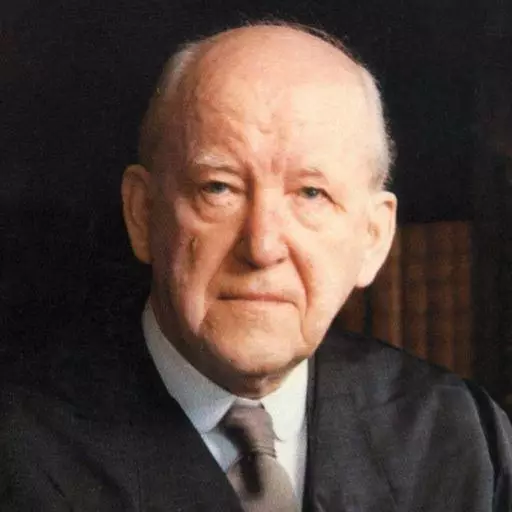
Dr. Martyn Lloyd-Jones photo
Dr. D Martyn Lloyd-Jones – His Life and His Ministry
by Sir Fred Catherwood
 
Share with your friends

Bethan was about to qualify as a doctor at University College Hospital. After a long courtship he told her that he wanted to give up Harley Street and become a Minister. After a year in which God clearly guided her too, they married and in 1927 moved into their first home, a small manse in Aberavon, Wales.

The church in Aberavon

The dramatic move of the young Harley Street specialist and his new bride could hardly fail to attract attention and the press descended on them. Mrs. Lloyd-Jones once turned a reporter away at the front door with 'no comment' and was horrified to read the headline next day ' "My husband is a wonderful man" says Mrs. Lloyd-Jones.'

Dr. Lloyd-Jones was not another young minister fresh out of a liberal theological college, trimming his message to contemporary opinion and the prejudices of his congregation. He was determined to preach the message with the crystal clarity in which it had come to him. That was too much for some of the congregation and they left. But in their place - slowly at first - there came increasing numbers who were gripped by the truth, the working class of South Wales. The message brought them, and the Holy Spirit converted them. There were no dramatic appeals, just a young man with the clear message of God's justice and his love, which brought one ‘hard case’ after another to repentance and conversion.

The church in Aberavon grew with the steady stream of conversions. Notorious drunkards became glorious Christians and working men and women came to the Bible classes which he and his wife conducted, to learn the doctrines of their new-found faith. Around South Wales other churches that were often starved of sound teaching and of preaching which dealt with the world as it was (in the depth of the great slump), invited him to their pulpits. His reputation grew across the Principality and beyond.

The Move to Westminster

The evangelical with perhaps the greatest national standing in the 1930s was G. Campbell Morgan, Minister of Westminster Chapel. When he heard Martyn Lloyd-Jones, he wanted to have him as his colleague and successor in 1938. But it was not so easy, for there was also a proposal that he be appointed Principal of the Theological College at Bala; and the call of training a new generation of ministers for Wales was strong. In the end the call from Westminster Chapel prevailed and the Lloyd-Jones family with their daughters, Elizabeth and Ann, were finally committed to London in April 1939. He had begun his ministry there on a temporary basis in September 1938.

Campbell Morgan personified the evangelical tradition after Spurgeon. He was an Arminian and his Bible exposition, though famous, did not deal in the great doctrines of the Reformation. Martyn Lloyd-Jones was in the tradition of Spurgeon, Whitefield, the Puritans and the Reformers. Yet the two men respected each other's positions and talents and their brief partnership, until Campbell Morgan died at the end of the war, was entirely happy.

An Uncertain Future

September 1938 saw the Munich crisis and a very uncertain future for the new ministry. For the next year the family lived with the Doctor's widowed mother in Vincent Square and, when the war finally came, they moved to Haslemere in Surrey. But the services at Westminster Chapel continued, apart from a brief time in the Livingstone Hall, until in 1944 a flying bomb exploded on the Guards Chapel a few hundred yards away, covering the Westminster Chapel preacher and congregation in fine white dust. One member of the congregation opened her eyes after the bang, saw everyone covered in white and decided that she must be in heaven!

For the next year the services were held in the Livingstone Hall nearby. Meantime the Doctor had become sole minister and had moved into a manse in Ealing just as the flying bombs started to rain on London. But he, his family and the Chapel were spared. He had been given an assurance by God that the Chapel would not be destroyed.

The City of London is a sink for provincial reputations. Great Scottish orators have come to nothing in the face of sharp London audiences. The bombing, the flying bombs and the difficulties of travel hit central London churches and the new minister's style and message were not that of his predecessor. But Dr. Lloyd-Jones's preaching met a need and his reputation spread. For everyone who left the Chapel, someone else arrived, so that by the end of the war he had a settled congregation and a well-established position.

His Preaching

In his approach to the work of the pulpit Dr. Lloyd-Jones did not follow Spurgeon. He believed in working steadily through a book of the Bible, taking one verse or part of a verse at a time, showing what it taught, how that fitted into teaching on the subject elsewhere in the Bible, how the whole teaching was relevant to the problems of our own day, and how Christianity contrasted with fashionable views.

He stayed in the background and tried to show his congregation the mind and word of God, letting the message of the Bible speak for itself. He aimed to let God speak as directly as possible to the man in the pew, with the full weight of divine authority, and to minimise intervention by the preacher that might water-down the direct and authoritative message.

His style was that of sharp clinical diagnosis, analysing the worldly view, showing its futility in dealing with the power and persistence of evil, and contrasting the Christian view, its logic, its realism and its power. He had the ability to clothe his clinical analysis with vivid and gripping language, so that it stayed in the mind. He could be scathing about the follies of the world and give a contrasting vision of the wisdom and power of God in a way which brought strong reaction from his audience. People would walk out, determined never to come again. Yet, despite themselves, they would be back in the pew the next Sunday until, no longer able to resist the message, they became Christians.

After the war, the congregations grew quickly. In 1947 the balconies were opened and from 1948 until 1968 when he retired, the congregation averaged perhaps 1,500 on Sunday mornings and 2,000 on Sunday evenings.

Note: The original article appeared in the Christian monthly newspaper, The Evangelical Times.

The full article can be read on-line at: http://www.mlj.org.uk/mlj.nsf/pg/mljbio?opendocument

 
Share with your friends

Featured Offer from From the MLJ Archive

Dr. D. Martyn Lloyd-Jones

Eryl Davies had the privilege of sitting under Martyn Lloyd-Jones’ ministry on numerous occasions in churches, and in the annual Ministers’ Conferences held at Bala, in Wales.

He has written this book as a brief biography for those who want to learn more about the Doctor, but would prefer not to grapple with the lengthy official biography written by Iain Murray.

“A profitable couple of hours lie before anyone reading Dr. Eryl Davies’ study of this admirable man.”
Geoff Thomas, Pastor
Alfred Place Baptist Church, Aberystwyth, Wales

Order in the UK
