
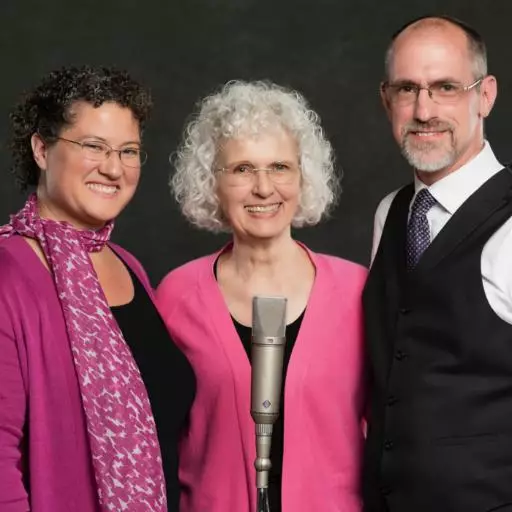
The Man Who Believed What God Said (Part 2) / Twelve Months on a Boat


The completion of the story of Noah and the flood. (Genesis 7-8)
Guest (Female): Hey, sis. Dad, mom, come on. Your story hour's on.
Guest (Male): Presenting your story hour, building for a better tomorrow.
Aunt Carol: Hello everyone.
Uncle Dan: Hi, I'm Uncle Dan.
Aunt Carol: And I'm Aunt Carol. We're glad to be with you again.
Uncle Dan: Today we have chapters two and three in our series on Noah, a man who had great faith in God.
Aunt Carol: He not only believed what God told him about a great flood that would cover the earth and kill every living thing, but he got busy and followed God's directions in building a great ship called an ark.
Uncle Dan: Now this was no easy job. As a matter of fact, it took Noah and his sons 120 years to build this huge ark.
Aunt Carol: People thought Noah's warnings about the coming flood were crazy. After all, there'd never been a flood before. They made fun of him.
Uncle Dan: It's not easy to go against peer pressure, but Noah had a personal relationship with the Lord. He knew whom he believed, even if all his friends, neighbors, and so-called weather experts told him otherwise.
Aunt Carol: You can read about the great flood in the first book of your Bible, Genesis chapter 6, 7, and 8.
Uncle Dan: But right now, just sit back and listen as we bring you the story of the man who believed what God said.
Guest (Male): For many years, Noah has been warning the world of an impending flood. At the same time, he and his three sons work untiringly to build a great boat to house people and animal life during the storm.
Guest (Female): There comes Noah now.
Guest (Male): Oh, those three young men following Noah on the platform are his three sons, Ham, Shem, and Japheth. Those four women back of the platform are probably Noah's wife and his three sons' wives, huh?
Shem: People, people, people, quiet please. Friends, I am Shem, eldest son of Noah. It's my duty and great pleasure to introduce Noah, my father, chosen of God to herald the coming flood.
Noah: By this time, it is common knowledge that this ark is being built as an ark of safety for all those who will choose to be saved from the soon coming flood. God is a God of love. He is not willing that any shall perish. Even now, if the world would repent and turn away from its sins and evil doing, God would spare the earth from the flood. But God is also a just God and a powerful God. He will not be trifled with nor continue his long suffering with sin and wrong doing forever. If men choose to continue in their evil ways, he will most certainly destroy the world with a flood from which none will escape.
Very soon, the flood will be upon you. Not many more times will I be able to warn you. Won't you believe? Come into the safety of the ark.
Shem: Thank you friends for your attention. Tomorrow, my father Noah will again appear on this platform as he will every day until the day of the flood.
Guest (Male): Oh well, come on. It's all over. Let's go home.
Guest (Female): Before we return home, excuse us for a few moments, will you?
Guest (Male): Oh surely, but I'll be right here when you get back.
Guest (Female): Come on, dear.
Guest (Male): Yeah, but don't be gone long.
Guest (Female): Where are we going?
Guest (Female): Wait until we get out of your father's hearing. I don't want him to know where we're going.
Guest (Female): Oh.
Guest (Female): Did you notice those four women back of the platform?
Guest (Female): While Noah was speaking?
Guest (Female): Yes.
Guest (Female): What about them?
Guest (Female): One of them was your sister.
Guest (Female): It was? I didn't notice.
Guest (Female): I did. We're going to find her and talk to her. There she is. She sees us too.
Guest (Female): Mother.
Guest (Female): Sis.
Guest (Female): Hello. What are you doing here?
Guest (Female): More appropriately, what are you two doing here?
Guest (Female): Your father brought us to hear Noah and to view the ark.
Guest (Female): Father came and brought you? Oh, this is a surprise, mother. Oh, I'm so glad you decided to come.
Guest (Female): Oh daughter, why don't you give up this silly idea and come back home?
Guest (Female): No, mother. I'm convinced that God is using Noah to warn the world of the flood. I I must follow my convictions. But you, mother, you, Aunt sis, why don't you come with us and be saved?
Guest (Female): I don't know what to believe. I'm confused.
Guest (Female): Believe, mother. Believe what God says. Noah speaks the truth.
Guest (Female): Well, I Perhaps, but I can't. I don't want to leave your father. Maybe maybe if there is a flood, you'll let me in the ark then.
Guest (Female): Oh, I wish that I could, but I won't be able to, mother. Once the door of the ark is closed, it'll be too late. Our doom will be sealed. Oh, but it isn't too late now, mother. There's still time today.
Guest (Female): Mother? Mother?
Guest (Female): Yes, dear.
Guest (Female): I just heard. Sis is married. She married Shem. Mother, did you hear me? Sis married Shem, Noah's oldest son.
Guest (Female): I heard you. She's She
Guest (Male): Where are you two? We're going to the ark right away.
Guest (Female): Again?
Guest (Male): Now hurry, or I'll go without you.
Guest (Female): Go ahead and go.
Guest (Male): Oh, don't you want to go?
Guest (Female): Should I want to?
Guest (Male): It's rumored that the ark is completely finished and something's about to happen. Might be exciting. They're going to call the old man's bluff, make a fool out of him. Should be interesting, huh? Well, well, are you going or not?
Guest (Female): Oh, don't be so impatient. I'll be ready in a few minutes.
Guest (Female): I'm going too, father.
Noah: People, my my dear people, the ark is finished. Every part of it just as God directed. A great abundance of food for both man and beast is laid in store. Now once more I am
Guest (Male): All you need now is some people and animals, eh Noah? Need some help to round them up?
Noah: Once more, my people, I plead with you. Accept God's last call of mercy. He loves you. His great heart yearns to save you. He has provided a way of escape for you. For 120 long years, he's waited for you. Is there not one who will enter the ark of safety now? Now while the door is still open?
Guest (Male): Just a minute, friends. As one of your leaders, a representative of the masses, I say don't be alarmed by what this man is saying. The threatenings of God are for the purpose of frightening you. But you need not be alarmed. Such an event is the destruction of the world by the God who made it and the punishment of the beings he has created will never take place. For centuries, the laws of nature have been fixed. The seasons come and go in their order. The earth has always been watered by a mist or dew. The rivers have never yet overflowed their boundaries.
As to rain or water coming down from the heavens and causing a flood, Continue to build, to drink, and be married. For this Noah is a wild fanatic, a deluded old man.
Guest (Male): Look, look over there, coming toward the ark. Animals, all kinds of animals.
Guest (Male): A great silence has just fallen upon this vast mocking throng. A strange phenomenon is taking place. Beasts and animals of every description, the fiercest as well as the most gentle are seen coming from mountain and forest. They all seem to be quietly making their way toward the ark. The clean beasts are coming in sevens and the unclean in twos. And now something else is beginning to happen. There's a a noise, a noise like a rushing wind. Why it's birds. Birds are flocking from all directions. So many of them that their numbers are darkening the very skies.
It's a a very strange sight. They seem to be flying in perfect order straight into the great doorway of the ark. The animals and the fowls are obeying the command of God, but men refuse to heed his command. All that is except Noah and his wife and their three sons and their wives, they also have now entered the ark.
Guest (Male): Look, there's a dazzling light by the door of the ark. The door of the ark is is is closing all by itself.
Guest (Female): Maybe an angel from heaven is closing the door.
Guest (Male): Noah and his family are inside the ark.
Guest (Female): I'm glad our daughter is in there too.
Guest (Female): I'm afraid.
Guest (Female): We have need to be afraid. There is going to be a flood. We are doomed. We have sinned away our day of grace.
Guest (Male): Oh, nonsense, nonsense.
Guest (Female): Then how do you explain all these unusual happenings?
Guest (Male): I don't I don't know, but our wise men and philosophers will explain them. Just wait and see.
Guest (Male): Friends, I have been chosen as the spokesman for your leaders, your elders, and wise men. They have instructed me to assure you that there will be no flood. Despite the unusual things you witnessed here, there still can be no flood. You are urged to get back to your normal way of life. There will be no flood.
Guest (Male): For seven days after Noah and his family entered the ark, there appeared no sign of the coming storm. During those long days, the faith of Noah and his family was tested. But it was a time of triumph to the crowds outside. More than ever, they were sure the flood would never come.
Guest (Male): How long do you think they'll stay in that boat house? It must be awfully dull in there without anything going on.
Guest (Male): Oh, they have to feed the animals, you know. Hey, hey Noah. Noah, open up the door. Open up so you can prophesy about the coming flood, huh? Hey Noah. Oh Noah.
Guest (Male): Yeah Noah, you've been preaching a day of doom for 120 years. If you ever show your face again, we'll feed your carcass to the lions and buzzards.
Guest (Male): On the eighth day, dark clouds overspread the heavens.
Guest (Male): What is it?
Guest (Female): Beginning of the flood. That's what.
Guest (Male): Then came the muttering of thunder and the flash of lightning. Soon, large drops of rain began to fall.
Guest (Male): Maybe there will be a flood.
Guest (Male): The world had never witnessed anything like this and the hearts of men were struck with fear. Darker and darker grew the heavens and faster and faster came the falling rain.
Guest (Male): There is going to be a flood. What are we do?
Guest (Female): I'm going to make my sister let me in the ark.
Guest (Female): It's too late. Remember what she said, that once the door was closed, no one could get in.
Guest (Male): I know what I'm going to do. I'm going to tie myself to the ark. If it's saved, then I'll be saved too.
Guest (Female): It won't do you any good. There's nothing we can do to save ourselves. There's no use even to try.
Guest (Male): Well, I'm going to try.
Guest (Male): Lots of people tried in vain to save themselves. Many pleaded to be let in the ark or endeavored to break in. Others fastened themselves to massive trees on lofty mountains. Some lashed themselves and their children to strong animals, believing that the animals would climb to the highest points to escape the rising waters. But all in vain. The storm increased in fury. The fountains of the deep were broken up and the windows of heaven were opened. As the waters covered the lower places of the earth, many people fled to the mountain tops. Finally, even these were covered and the despisers of God perished in the black depths.
The world became a shoreless, lifeless ocean. Inside the ark was peace of mind and safety and thankfulness to God that God is not only a God of law and justice, but also a God of love and mercy.
Noah: Oh great and merciful God in heaven, we thank Thee for saving us this day from destruction. Now wilt Thou sustain us through the trying days and weeks that lie ahead? Preserve the ark and its cargo of living creatures as it is tossed about by the angry billows. And when these waters shall subside, may we continue always to worship and obey Thee in all things. Oh God, may Thy mercies and wondrous love abound forever and ever.
Aunt Carol: We'll bring you the third chapter in Noah's story in just a moment. But first, we just have to ask, wouldn't you like to have as strong a faith in God the Father as Noah did?
Uncle Dan: We all can have that faith in God when we know Jesus as our personal friend. Jesus said he came to show us the Father and Jesus said if we've seen him, we've seen the Father.
Aunt Carol: You see, faith is trust and trust grows as we spend time getting to know Jesus and through him, the Father. We do this through Bible study and prayer.
Uncle Dan: Don't wait until you face a crisis to decide you want a relationship with God. It's much wiser to know he's your trusted friend right now.
Aunt Carol: Mhm.
Uncle Dan: You see, even if you never face a flood like Noah did, every life has hard times, but the hard times are so much easier when we know God loves us and we can safely trust him to carry us through.
Aunt Carol: So we'd like to encourage you to join our adventures in the Holy Bible Club by reading the stories, filling out the quizzes, and listening to the fully dramatized audio stories on the life of Jesus that are all part of club membership. You'll be getting to know him so much better, your faith will grow.
Uncle Dan: The adventures are written using vocabulary nine year olds understand. We haven't used difficult theological terms.
Aunt Carol: Adventures membership is totally free. The stories, quizzes, and audio stories are our gift to you.
Uncle Dan: So visit our website at yourstoryhour.org, click on the adventures icon, and sign up today. That's the quickest way to get started. That's at yourstoryhour.org.
Aunt Carol: If you don't have access to the web, don't worry. You can send Uncle Dan and me a card or letter asking for the adventures. We'll get them out to you right away.
Uncle Dan: Our address is your story hour box 8 Niles, Michigan 49120.
Aunt Carol: Once again, it's your story hour box 8 Niles, Michigan 49120.
Uncle Dan: Now here's chapter three in our story of Noah. We call it 12 months on a boat.
Guest (Male): Holy scripture says
Guest (Male): And rain fell upon the earth 40 days and 40 nights and the waters increased and bore up the ark and it rose high above the earth. And waters prevailed above the mountains, covering them 15 cubits deep.
Guest (Male): It often seemed to the family within the ark that they must perish as for five months their boat was tossed about. It was a trying ordeal, but Noah's faith did not waver. He had the assurance that God's hand was guiding the ark.
Ham: Oh, I wonder if we'll ever get out of this alive.
Noah: My Ham, shame on you talking like that.
Ham: We've been shut up in this ark for almost half a year. Think of it, 150 days and still the storm rages. Oh, listen to the wind and feel the motion of this boat.
Noah: Ham, you Oh, it is discouraging, I'll admit.
Guest (Female): Father Noah says that God will take care of us. Just have patience.
Ham: Patience? For five months we've been shut in with all these noisy birds and animals. I'm getting tired of it.
Noah: Son, I know it's been difficult, but let's remember that God has been very merciful to us.
Ham: Oh, I know, father, but 150 days of this is enough to drive anyone to distraction.
Guest (Female): Listen.
Ham: And still the end is not in sight.
Guest (Female): Listen, please listen.
Noah: What is it, dear?
Guest (Female): Things sound different than they did and and this boat it it's not tossing around like it was.
Ham: Some of the noise has stopped.
Guest (Female): That's right.
Ham: Maybe we're on dry land.
Guest (Female): We must be.
Ham: Let's open the door and find out.
Noah: Oh, it'll be a relief to stretch again and not have a bunch of smelly animals around.
Guest (Female): I'll go get our things together.
Ham: All right, but hurry back. We'll open the door. Just a minute, just a minute.
Guest (Female): We'll be sure of that.
Noah: We're going to open no door. We're going to stay right here, so just keep calm.
Ham: We may be on dry land.
Guest (Female): Yes, father.
Noah: Be quiet all of you. Listen to me. We came in the ark at the express command of God. We will leave only at God's express command. God closed the door. It will not be opened until he opens it.
Ham: But father, surely you don't think
Noah: No, no, quiet Ham. You and Japheth remove the covering from the window in the top of the ark. We'll look out and see if we are on dry land or not.
Ham: Steady. I think I got it. There. There, the window's open.
Guest (Female): What do you see?
Ham: I Can't see anything yet.
Noah: Now Shem, you call up in the window and tell us what you see.
Ham: Yes, sir. Get up here.
Noah: Really do you know?
Shem: The sky it it's blue and clear.
Ham: Oh, the storm's over at least.
Shem: I can I can't see if the ark's on water or not, but evidently it is because I see water everywhere. We we seem to be floating on a sort of a lagoon. I can see the tops of mountains all around us.
Noah: The Lord is protecting us. He has caused the ark to drift into this spot, protected by a group of mountains.
Ham: But we can't get out of the ark yet?
Shem: No, the the tops of the mountains are the only land showing.
Guest (Female): How soon will it be dry enough to go outside?
Noah: Well, it's hard to say, daughter, but at the proper time we'll leave this ark and start life again on the earth.
Guest (Male): Noah and his family anxiously waited for the drying up of the waters for they longed to go forth again upon the earth. Finally, on the 40th day after the tops of the mountains became visible, they sent out a raven.
Noah: All right, Ham, let the raven loose.
Guest (Male): There goes.
Guest (Female): What good is it going to do to let the raven loose?
Noah: The raven is a bird of quick scent. If there is dry land, the raven won't be back.
Guest (Female): Oh, I see.
Guest (Male): The raven isn't even flying away. He's just flying back and forth around the ark.
Noah: Evidently he doesn't detect any dry land, which means we'll have to wait longer before disembarking. Oh, let the raven in again.
Guest (Male): Yes, sir.
Guest (Male): Seven days later they again sent out a bird, this time a dove.
Guest (Male): It's flying straight away from the ark.
Guest (Female): Maybe the water's dried up now.
Guest (Male): We'll soon know. Oh, here it comes back.
Guest (Female): It's still not dried up.
Noah: Evidently not. All right, Ham, let the bird in.
Guest (Male): A week later Noah again sent forth the dove.
Guest (Male): Oh, here it comes back.
Guest (Female): I thought surely the water would be dried up by this time.
Noah: One of these days it will be. Just be patient.
Guest (Male): The dove, the dove, it's got something in its bill.
Noah: Something in its bill, huh?
Guest (Male): Don't just a minute now. I'll be able to see what it is.
Guest (Female): Oh, I wonder what it can be.
Guest (Male): It's an olive leaf.
Guest (Female): An olive leaf?
Guest (Male): A green one.
Noah: Oh, at last. The water is dried up and vegetation is springing forth.
Guest (Female): Oh, wonderful news at last.
Guest (Male): The hopes of Noah and his family were again revived.
Guest (Male): And Noah removed the covering of the ark and behold, the face of the ground was dry.
Guest (Male): Still they waited patiently within the ark for nearly two more months, waited for God's command to leave the ark. At last
Guest (Female): Look. Look at that bright light.
Guest (Male): Yes, and the door, the door of the ark it's being opened.
Guest (Male): Then God said to Noah
Guest (Male): Go forth from the ark, you and your wife and your sons and your sons' wives with you. Bring forth with you every living thing that is with you of all flesh that they may be fruitful and multiply upon the earth.
Guest (Male): In the joy of being released from the ark, Noah did not forget him by whose gracious care they had been preserved. His first act was to build an altar and offer a sacrifice of every kind of clean beast and fowl, showing his gratitude to God and his faith in the coming Messiah.
Ham: But father, why sacrifice so many animals? We preserve these animals, a great labor and expense. Oh surely God doesn't expect us to waste them on sacrifice.
Noah: Son, our first consideration always should be of God. We should cheerfully give him the first fruits of our labor. Every gift to us from God should be acknowledged by gifts for him and acts of devotion. We will sacrifice one each of the clean animals and fowls.
Guest (Male): And when the Lord smelled the pleasing odor, the Lord said in his heart,
Guest (Male): I will never again curse the ground because of man. While the earth remains, seed time and harvest, cold and heat, summer and winter, day and night shall not cease.
Guest (Male): And God blessed Noah and his sons. Sometime later
Ham: Look. Look all of you. Over there in the eastern sky another storm's approaching.
Guest (Female): With another flood coming, we'll all be killed.
Ham: Look. There there's a beautiful colored bow in the sky.
Guest (Female): Father Noah, does it mean that we'll have another flood?
Noah: I I don't know what it means. I know only that whatever comes, it will be God's will.
Guest (Male): And God said to Noah and to his sons with him,
Guest (Male): Behold, I establish my covenant with you and your descendants after you. Never again shall all flesh be cut off by the waters of a flood to destroy the earth. This is the sign of the covenant which I make between me and you and for all future generations. I do set my bow in the cloud. When I bring clouds over the earth and the bow is seen in the clouds, I will remember my covenant and the water shall never again become a flood to destroy all flesh.
Guest (Male): Yes, God put the rainbow in the sky that all the world may know that never again will he destroy the earth by a flood. Not long after this
Noah: Well, I think it's time we're building permanent homes, don't you?
Ham: Yes, father.
Noah: All right, sons, all three of you, do some exploring tomorrow morning. Try to find an ideal spot for our homes.
Ham: But father, what do you consider an ideal spot?
Noah: Well, look around for a natural, beautiful setting, a place that is centrally located as to a grazing area and suitable land for vineyards and gardening. You'll know when you find the right location. Well, sons, have any success?
Ham: Yes, father, but well, we're disappointed in what we found.
Noah: Oh?
Ham: Well, everything's changed from what it was before the flood. Nothing's the same, nothing at all.
Noah: What do you mean?
Ham: The mountains aren't pretty anymore. They're rugged and precipitous, jagged. Even the valleys and hillsides, they're ugly. All the forests are buried.
Noah: The entire countryside presents an appearance of confusion and desolation impossible to describe.
Noah: Such is the curse that sin has brought upon this once perfect and beautiful earth that God created. But with hard work and God's blessing, we shall go forth to build homes and re-inhabit the earth.
Ham: Yes, father.
Noah: Jesus made an interesting statement about the flood. You can read it for yourself in the New Testament of your Bible, the book of Matthew chapter 24 verses 37 through 39.
Aunt Carol: That's Matthew chapter 24 verses 37 through 39. Do look it up.
Uncle Dan: Now before we go, we need to explain something. You see, we're often asked how we can afford to offer free membership in our adventures club because the printed lessons, postage, and CDs cost money, not to mention the wages for Bible instructors. People often think that there must be a hidden charge.
Aunt Carol: There's no hidden charge. The adventures are free because hundreds of concerned adults make your story hour their personal ministry. They donate funds so others can learn of God's love.
Uncle Dan: So if you'd like to join your story hour's outreach, call us at 1-800-987-7879 with your gift. That number once again is 1-800-987-7879 or if you prefer, visit our website at yourstoryhour.org to donate. That's yourstoryhour.org.
Aunt Carol: And for all the children and from our hearts, thank you.
Uncle Dan: Bye for now.
Guest (Male): This has been your story hour, building for a better tomorrow.
Aunt Carol: This is Aunt Carol
Uncle Dan: and Uncle Dan saying
Aunt Carol: Goodbye everyone. See you again next time.
Uncle Dan: Goodbye everyone. See you again next time.
Featured Offer

"The Boy and the Giant." In this classic story, David faces an enormous problem. Listen to the adventure as David calls upon his faith and his courage to assist him in a battle against the mighty Goliath. Quality entertainment for the whole family!


Featured Offer
"The Boy and the Giant." In this classic story, David faces an enormous problem. Listen to the adventure as David calls upon his faith and his courage to assist him in a battle against the mighty Goliath. Quality entertainment for the whole family!
About Your Story Hour
About Aunt Nikki, Aunt Carole and Uncle Jon
Contact Your Story Hour with Aunt Nikki, Aunt Carole and Uncle Jon
Your Story Hour
PO Box 8
Niles, MI 49120
1-800-987-7879
1-269-471-3701