
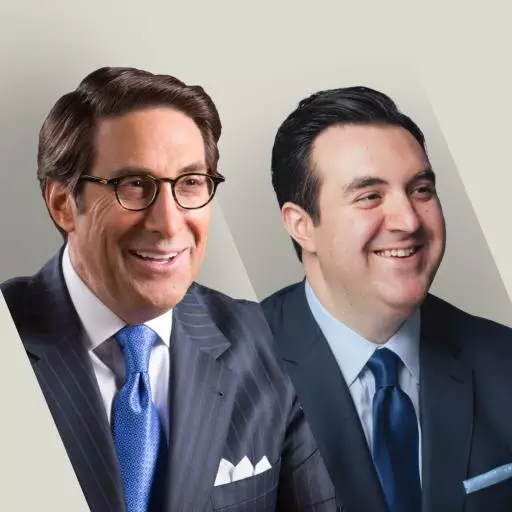
Sekulow


Logan and Jordan Sekulow are joined by Will Haynes to discuss a weekend of chaos in the media.
Logan Sekulow: Today on the show, a weekend of chaos leaves the mainstream media floundering. Welcome to Sekulow. It is Monday, June 8th. Is that right, Will?
Will: That’s correct. June 8th of the year 2026. Welcome to Sekulow.
Logan Sekulow: We’re going to be taking your calls at 1-800-684-3110. Will’s in studio, Jordan’s in studio, and we’ve got a packed show. Jeff Ballabon, ACLJ Jerusalem, is going to be joining us. Of course, if you’ve been following what’s going on in Israel, the rockets and missiles have returned. War has essentially restarted, it feels, after what was months of relative quiet.
Israel had kind of gone back into normal business. I was looking at a trip potentially. We were all kind of looking at, "All right, maybe things are going to finally calm down." And of course, they began once again. Now, thankfully, the Iron Dome did its job, and we can talk about that with Jeff a little bit later.
At the same time, you had a couple of different instances in the mainstream media where it feels like the chaos and the meltdown is occurring. And look, it’s also occurring, I want to say, not just because you have President Trump in the White House and someone who can be a little bit more aggressive. Remember, we’re in a new day. This is 2026. You’re going to see a lot of shake-up in the news, and not just with the CBS situation, not just Barry Weiss, not just conservatives. You’re going to see it across the board because they are in a bit of chaos to figure out what the future looks like for mainstream news media, for network news.
President Trump was on Meet the Press, and after a pretty extensive interview—but you probably didn’t see that—it ended a little bit rough. We’ll play that in just a little bit where he stormed out, and maybe rightfully so, maybe not. I want your thoughts on that. Do you think it was professionally done? 1-800-684-3110. And on the other side, you had Scott Pelley, former 60 Minutes—he was with 60 Minutes for decades. After going on what was allegedly a pretty long tirade against his new bosses, he was fired. Shocking that that can happen. And then now is saying it’s similar to the murder of his spouse, of how bad it is at CBS News right now.
That’s what it feels like, that it comes in waves, and it’s absolutely absurd. I mean, look, I think we are in a moment of media consolidation or in a moment of a completely restructuring of how news media is going to run. And though you may agree or disagree with how CBS and Paramount and all of them have handled maybe sort of their—you could say maybe there's a bias there for one political party or another, not that there hasn’t been on all sides of the news for decades and decades. Now they’re just getting a little taste of what it’s like.
But you are also seeing them finally have to respond to the age of new media after decades of being, it feels like, intentionally with their head in the sand. And here we are as chaos is starting to erupt in the media. Remember, most of the people who are probably complaining about the death of 60 Minutes probably haven’t watched 60 Minutes in decades themselves, if not ever.
Will: Well, it’s important to break this down, and that’s exactly what we’re going to do. We’re going to play some shocking sound for you. But once again, what you’re seeing is the self-importance of these journalists—that they believe that without them, this country will fall away. In reality, we know that they have let their biases creep in, that they have let their agendas creep in. They are not this Fourth Estate that they believe that they are anymore.
And when they are called out on that, then they have epic meltdowns. We’re going to show that because it’s important, because there are people that are trying to change the way that the legacy media operates to make it relevant again. And whenever you start to push against that, you’re starting to see these meltdowns. So it’s important to lay this out, not just from Scott Pelley at 60 Minutes, but also the way that it’s being spun and lied to you about President Trump walking out of an interview. It’s not exactly what they’re portraying, and we’re going to show that when we come back.
Logan Sekulow: Yeah, and also, look, like we said, it’s a new day in media. The reason you have even your Fox News saying, "Hey, we should launch more digital media options. We should have podcasts." All of their hosts now have to have a more chill, relaxed, casual podcast, whether it’s Sean Hannity or Shannon Bream or any of these hosts who you’ve known for years, now having to have sort of alternate programming. Why? They see where media is going, honestly a little late.
Let’s talk about that when we get back. Phone lines are open for you at 1-800-684-3110. What do you want from your news media in 2026? We’ll be right back on Sekulow, but hey, in the meantime, I want you to become an ACLJ Champion. That’s at ACLJ.org/champions.
Logan Sekulow: Welcome back to Sekulow. We do have some phone lines open for you at 1-800-684-3110. We addressed sort of the big media elephant in the room dealing with not only President Trump walking out of that Meet the Press interview that happened over the weekend, as well as Scott Pelley going on and making his statement of why he feels so upset about being fired from 60 Minutes. And again, 60 Minutes has created great content for decades. I don’t want to pretend that they haven’t been a mainstay in mainstream media and have done a good job.
But what has happened is you have new ownership, you have new people in charge, and you know what? It’s 2026. It’s okay for these things to change. So we’re going to go over that, and we also are going to hear from Scott Pelley himself. Do you want to start Scott Pelley or President Trump, Will? Where do you want to go?
Will: I actually want to start with President Trump here and then we’ll get to the Scott Pelley, because it feeds into this narrative: the self-importance of these journalists that think that they are what’s keeping this country together. This is actually the walkout moment from President Trump with Kristen Welker. I want to give you a little bit of background here as well, because there has never, I think, been a president that’s more accessible to the people that hate him the most—the press—than this president, right?
President Trump has been on Meet the Press as President three times—once back in his previous term with Chuck Todd, and now this is the second Meet the Press appearance with Kristen Welker in his second term. What you’re seeing with the headlines "Walks Out After He Gets Pushback," "Contentious Interview," etc., is only showing the end. We’re going to show that too, because he, I thought, did a great job. But what they’re not showing you is the 38 minutes of interview that they aired before this moment.
Logan Sekulow: The frustration that led to this.
Will: He gave a full interview. They’re making it seem like he showed up, did five minutes, and said, "This is a waste of my time" and walked out. In the rain, where it’s on a metal roof on a farm in rural Wisconsin, and they have to keep pausing and moving the times and saying, "Hey, can we wait?" He gave them more of an hour of content. They aired 38 minutes of it, and this is the clip they’re showing you. This is bite one. It’s the end of it, but they’re not saying that he sat down and fully cooperated. Let’s roll bite one.
Logan Sekulow: That self-importance of "we traveled all the way to Wisconsin." Yeah, and he gave you the interview. He gave you a full hour of content. You aired 38 minutes. It was almost your whole show, as normally Meet the Press is.
Will: And he brought up a good point: How many times did Joe Biden do that, Will? Zero. Joe Biden sat with Meet the Press during his presidency zero times. But they’re making it out like he’s the victim.
Logan Sekulow: Yeah, and after 38 minutes, you start getting into the nasty questions, which is what she was doing. So she pivoted to the "gotcha" questions after she went through the serious questions, and he said, "No, we’re not doing this. I’m not going to relitigate these things. I’m not going to relitigate them with you specifically." So we’ve had enough here. And they play it like he didn’t give them an interview.
But in fact, he gave them more of an interview than any president usually does time-wise. They did travel to Wisconsin. They got about an hour of an interview that they played, like Will said, about 38 minutes of that. And then at the end, they say, "Oh, see, he got up and just left." It’s false advertising about what actually happened. That’s the truth. And that’s become pretty common when it comes to President Trump trying to engage mainstream media is that they just can’t tell the truth.
They didn’t say, "Hey, before he got up, he did spend nearly an hour with us on the record that we’ve got for you that we’re going to show later today." It was like as if he sat down, got one question, and stormed out. Yeah, that’s what I honestly thought had happened because I had not seen the whole thing. I do not watch Meet the Press every week. I was not aware of anything other than that clip that was going around. So to see that, also you’re right, the self-importance of "we traveled all the way here." That is what you do with Presidents of the United States. You’re also from Washington, D.C. to what, Milwaukee or wherever this may be? That’s an 80-minute flight.
Will: But it’s also that’s your job. Your job is to go cover this. And if you get your now second sit-down with the President, maybe don’t go back to the same old tired lines of "with no evidence, with no evidence." You didn’t even get the opportunity to speak to the previous President of the United States because he was unable to give interviews.
But I think it also, this self-importance, it goes to the Scott Pelley thing. This is where he’s talking now with the New York Times, lamenting about his firing, where he said nasty things about his boss in a meeting with multiple people and they said, "You know what? You’re not going to work here anymore."
Logan Sekulow: Yeah, anyone who’s listening to this, try that with your boss and see what happens here.
Will: Right, literally say, "You have murdered my job." That’s what he said in the meeting, and he reiterated that later. But this is him. This is bite two. Because this goes to that self-importance factor. Because he was responding to President Trump saying a litany of things about Scott Pelley, as well as saying, like, they don’t even care about this country. And here’s where the self-importance shines through. Here’s how Scott Pelley sees himself. Bite two.
Scott Pelley: I’ve never worn the uniform, but I’ve been in combat for this country in Afghanistan and Iraq, Kuwait. Been shot at. Spent nights in foxholes filling up with water in the desert. I’m not aware that the President of the United States has ever done any of those things for his country. Please correct me if I’m wrong.
You become a journalist because you love the First Amendment. You become a journalist because you love the country. And while all the other descriptions that the President used about me might be applicable, not that one.
Logan Sekulow: And again, that was from Scott Pelley doing an interview about obviously being fired from his long-standing job. And look, the idea of "I’ve been in combat for this country" is a bit odd to say when we really know what you mean. Look, I have full respect for the journalists that do put themselves in the press, war reporters that go into harm’s way to get us the information. More respect than you possibly know to all of those people, including Scott Pelley in that situation.
However, do not pretend also you are a soldier, not pretend you are fighting for the country in that way. That is a very different thing. You start really getting into the stolen valor kind of warning. You could be there—you’re voluntarily being in that. Obviously, we have a volunteer military as well, but it’s a different situation than being the one who are the actual targets.
And to then say, "Correct me if I’m wrong, I don’t know if the President has ever done that," the Commander-in-Chief of the country... Right, he’s been the Commander-in-Chief multiple times now. He’s been re-elected after the 2020 debacle. And so he is now President again, Commander-in-Chief, a constitutional position, right?
I want to hear from veterans. Is this offensive to you? As it seems, I would be offended if I had actually worn the uniform and gone to combat for this country, and here’s someone saying, "I’ve never worn the uniform, but I have been in combat for the country."
Also, "You become a journalist," he said, "because you love the First Amendment, because you love this country." I don’t know if that simply applies anymore. There are plenty of people, by the way, in the history of journalism that were what? Propagandists. I mean, let’s just not beat around the bush here. I mean, some of the most legendary journalists of our time were not always on the up and up. So let’s not just give some blanket, "You want to be a journalist because you love the First Amendment." I don’t know. There are a lot of journalists who are doing double duty, who have always been people who are against the First Amendment, are against the government, against or working on behalf of other governments. So let’s make it a little less like it’s this—I mean, look, I would consider ourselves journalists to some extent, and I also think there need to be checks and balances.
Will: Well, I think if you work for the American Center for Law and Justice, you truly love the First Amendment. That is kind of the core of what the work is here. It’s not just going on 60 Minutes, having a very long, comfortable career as he has and supported. And then all of a sudden you get fired because you go trash your boss in a meeting and we’ll play when we come back how he compared getting fired at the end of his career because it’s absurd.
It goes back to, no, he’s saying he does it because he loves the First Amendment. In reality, he loves himself. And that is the way that he is putting that forward. It’s the same with Kristen Welker saying, "I traveled all the way to Wisconsin." Yeah, normally because that’s what they called flyover country, they didn’t care to stop.
Logan Sekulow: Look, the ACLJ continues on in this fight as well. You know we have our current case up at the Supreme Court of the United States, and there’s probably some updates going on with that too, as well in terms of our lawsuit against CNN. Why? Because we want to protect people who are being lied about on mainstream media. That’s what’s currently happening in this country. That’s what the ACLJ is involved in.
I want you to get involved in it, too. So right now, I want you to go to ACLJ.org/champions, become a Champion if you can today. We do have an update, we’ll get to that coming up. We also are going to take things over to ACLJ Jerusalem. We know that the fighting with Iran has come back pretty strong as Iran has attacked, and now we will see a return from Netanyahu and the Israeli government. And again, kind of feels a little bit back to square one, but we’ll see where we’re going with that. We’ll continue that coverage in a little bit. But again, I want you to go to ACLJ.org and if you can, become a monthly Champion today. Just scan the QR code, opt in. Again, ACLJ.org. We have a couple lines still open, not many: 1-800-684-3110.
Logan Sekulow: Welcome back to Sekulow. We have a bunch of calls coming in, and I want you to call in, too, so keep this going: 1-800-684-3110. We’re talking about Scott Pelley’s comments. We’re also talking about President Trump storming out of that Meet the Press interview. What the landscape is of the mainstream media in 2026. As we have seen such a shift over the last few years that really their relevancy, at really any sort of claim they can even have to shifting people’s thoughts and minds. I don’t think that exists near as much as people—maybe not as much as they think they hold. I mean, when was the last time you seriously watched any of these programs?
We live in a very fragmented society now. Sure, they have their audience and again, legendary broadcast 60 Minutes. I’ve got nothing but respect for a lot of the people who have been working on that show for decades and decades and decades. I like that we have some of those long-standing things. But it doesn’t mean things don’t change.
Scott Pelley, though, is so upset, and he started comparing himself to not only a widow or a widower—someone who thought like their spouse was murdered—based on him losing his job after having an outburst at work. Plus, you had him saying essentially he’s been in the foxholes with soldiers, and not only that, started to almost act like he was a combat veteran. And though I understand and I respect wartime journalists who go and put themselves in harm’s way, it is very different to me than someone who is an active-duty soldier, an active-duty Marine, you know, some part of the Navy, Air Force.
Let’s take a call. We got a lot of calls coming in. We’ll start with Dave, who is calling on line three. Dave, go ahead.
Dave: Yeah, I’ve got to say that Scott Pelley’s comment is completely insulting to anybody who actually wore the uniform, who volunteered to put their life on the line for the freedoms that we benefit from. I have never heard a comment like that that sets me off like I am right now.
Logan Sekulow: Yeah, Dave, I understand that. I mean, look, I’m not going to stand here and take stolen valor as I say I've any sort of way other than to say thank you for doing what you’ve done. Thank you for your service to the country, and thank you to all the people, and again, like I said, thank you to the journalists, the wartime journalists that do go into war zones and actively do it. But let’s not pretend it’s the same thing.
And the holier-than-thou journalistic integrity that is coming upon these characters—and I don’t even put Scott Pelley on blast—it is sort of the nature of that era of journalists.
Will: Well, here’s also where I want to draw this little experiment out a little bit more about the self-importance versus them saying, "You know, we are the most important thing. Like, this is, we love the First Amendment and we go into this knowing that all these things could happen and we are the last line of defense of democracy." There’s lines like that as well from his interview.
But here’s the problem. Because the Kristen Welker line of questioning that prompted the end of the interview was when he mentioned something about the mayoral race in Los Angeles with Spencer Pratt, where what did we see? We saw a very statistically anomalous situation where the person who was the third amount of votes getter, Karen Bass, who was the leader, all of a sudden stopped getting votes from the mail-in ballots. In mass, it was all going to the person in third place, which is now gone ahead of Spencer Pratt in the mayoral election.
You know what true journalism is? Why does this happen? Asking the question about our elections. Why does this happen? Why does it seem that these only happen to benefit one ideology when there’s a big push of ballots that come in after the fact? That’s real journalism—asking the question, not yelling at the President of the United States, "You’ve never presented any evidence, you’ve never presented any evidence." Curiosity is the core of journalism and the First Amendment.
Logan Sekulow: Right, if those election results had come in during the first night, we would not be having the chaos that is ensuing right now.
Will: Right. It is you have once again created a question mark that the American people don’t want.
Logan Sekulow: Which is, do our votes actually get counted? Do our votes actually matter? And the answer is it’s starting to get more and more unclear if they do. And that is not good for future elections because as conservatives, we need conservative and independent voters to come out and elect conservatives. They have to believe that their vote will matter. If we fall into the trap that our vote doesn’t matter, guess what happens? We never win if people don’t go and vote.
Yeah, because it could be that everything is on the up and up and that all those votes are accurate and that there was no foul play involved. But it doesn’t matter because you have planted a seed for days that we’ve already lived through a couple times.
Will: Well, and once again, in that interview that led to the President saying, "I’m done here" because she kept pushing "You have no evidence," she kept saying, "That’s just how it works in California. The officials are saying they’re trying to count as fast as they can, but they’re slow. It’s California." Supposed to be the most advanced culture, the most advanced technology. That’s where all the tech firms, until they started leaving, were based. That is California.
And you’re going to tell me your excuses and you as a journalist, the defender of the First Amendment, the defender of democracy in this country, are going to take it at its word from local officials that, "Yeah, we’re slow," when it keeps happening to the same individuals that all of a sudden get these statistical anomalies? It makes no sense. So try and make it make sense. Do real journalism instead of going to the President of the United States and saying, "You always say this, but you have no evidence." Maybe if you did your job, there’d be actual evidence one way or the other to come back with that line of discussion.
So yeah, after an hour, I can understand probably when your producer’s in your ear saying, "Hey, we’ve got enough for a show, maybe push him now that he’s going to walk out." And they do that, by the way. That is how the media works.
Logan Sekulow: Let’s go quickly, if he’s still there, to Tim, who is calling on line four. Tim, you there?
Tim: Yeah, I’m there.
Logan Sekulow: Go ahead.
Tim: Yeah, I just wanted to say, you know, this stolen valor thing, Tim Walz in Minnesota and this Pelley guy. My wife’s grandfather was in—stormed Normandy and watched his buddies drop like flies. The guys that Pelley was, you know, to his left and to his right making thousands of dollars while he’s making millions off protecting him, and to steal their valor, it’s just pitiful.
Logan Sekulow: Yeah, I mean, Tim, that’s what I was saying. It’s like, remember, this is someone who’s claiming this, you do it for the First Amendment. You also do it because you’re in an ad-supported business, you know, brought to you by—
Will: Right, you were the king of a storied broadcast. You had a career, you thought you were untouchable.
Logan Sekulow: You thought you were so upset. When he found out he was being fired, let’s roll bite four.
Guest (Female): I can hear how much this has hurt you.
Scott Pelley: Yes. It’s like your spouse being murdered. And I don’t care about me. It’s not about me. I am not emotional about this because I have lost this job. I’ve done it for a long time. I’ve had the greatest experiences. But the people I leave behind, treated in this way, that breaks my heart. And it’s going to take me a long time to get over it, to be perfectly honest.
Logan Sekulow: I mean, that is almost a comedy routine. It is a job. Okay, you lost a job and you’re—let’s talk to anyone who’s actually had their spouse murdered and let’s see if you feel the same way about losing any job. How pretentious and ridiculous.
I like Scott Pelley for his historical impact on journalism. I like 60 Minutes. But it’s these kind of things that make you question all of it and everyone involved in these media outlets. We got a second half hour coming up. I want you to be a part of the show, too. Join us on ACLJ.org, on YouTube, Rumble, Facebook, however you get your podcasts, and then later on archived immediately when the show is over. Always catch us live though, noon to 1 PM Eastern Time. That’s at ACLJ.org. And opt in, become a Champion, make your donation today.
Featured Offer


Featured Offer
About SEKULOW
The American Center for Law and Justice (ACLJ) focuses on constitutional law and is based in Washington, D.C. The ACLJ is specifically dedicated to the ideal that religious freedom and freedom of speech are inalienable, God-given rights. In addition to providing its legal services at no cost to our clients, the ACLJ focuses on the issues that matter most to you — national security, protecting America's families, and protecting human life.
About Jay Sekulow
An accomplished and respected judicial advocate, Sekulow has presented oral argument before the U.S. Supreme Court in twelve cases in defense of constitutional freedoms. Several landmark cases argued by Sekulow before the U.S. Supreme Court have become part of the legal landscape in the area of religious liberty litigation; these cases include Mergens, Lamb's Chapel, McConnell v. FEC, Operation Rescue v. National Organization for Women, and most recently Pleasant Grove City v. Summum.
In 2009, Townhall Magazine named Sekulow to its "Townhall of Fame" and recognized him as "one of the top lawyers for religious freedom in the United States." In 2007, the Chicago Tribune concluded that the ACLJ has "led the way" in Christian legal advocacy. In 2005, TIME Magazine named Sekulow as one of the "25 Most Influential Evangelicals" in America and called the ACLJ "a powerful counterweight" to the ACLU. Business Week said the ACLJ is "the leading advocacy group for religious freedom." Sekulow's work on the issue of judicial nominees, including possible vacancies at the Supreme Court, has received extensive news coverage, including a front-page story in The Wall Street Journal. In addition, The National Law Journal has twice named Sekulow one of the "100 Most Influential Lawyers" in the United States (1994, 1997). He is also among a distinguished group of attorneys known as "The Public Sector 45" named by The American Lawyer (January/February 1997). The magazine said the designation represents "45 young lawyers outside the private sector whose vision and commitment are changing lives."
Sekulow brings insight and education to listeners daily with his national call-in radio program, Jay Sekulow Live!, which is broadcast throughout the country on nearly 850 radio stations. Sekulow also hosts a weekly television program, ACLJ This Week, which tackles the tough issues of the day. He is also a popular guest on nationally televised news programs on ABC, CBS, NBC, CNN, FOX News, MSNBC, CNBC, and PBS.
Contact SEKULOW with Jay Sekulow
jsekulow@aclj.org
http://aclj.org/
American Center for Law and Justice
PO Box 90555
Phone: 757-226-2489
1-800-684-3110
1-877-989-2255